Through costume, make-up and the scenes she builds, the photographs of Valentina try to bring out something that already exists in the people she photographs.
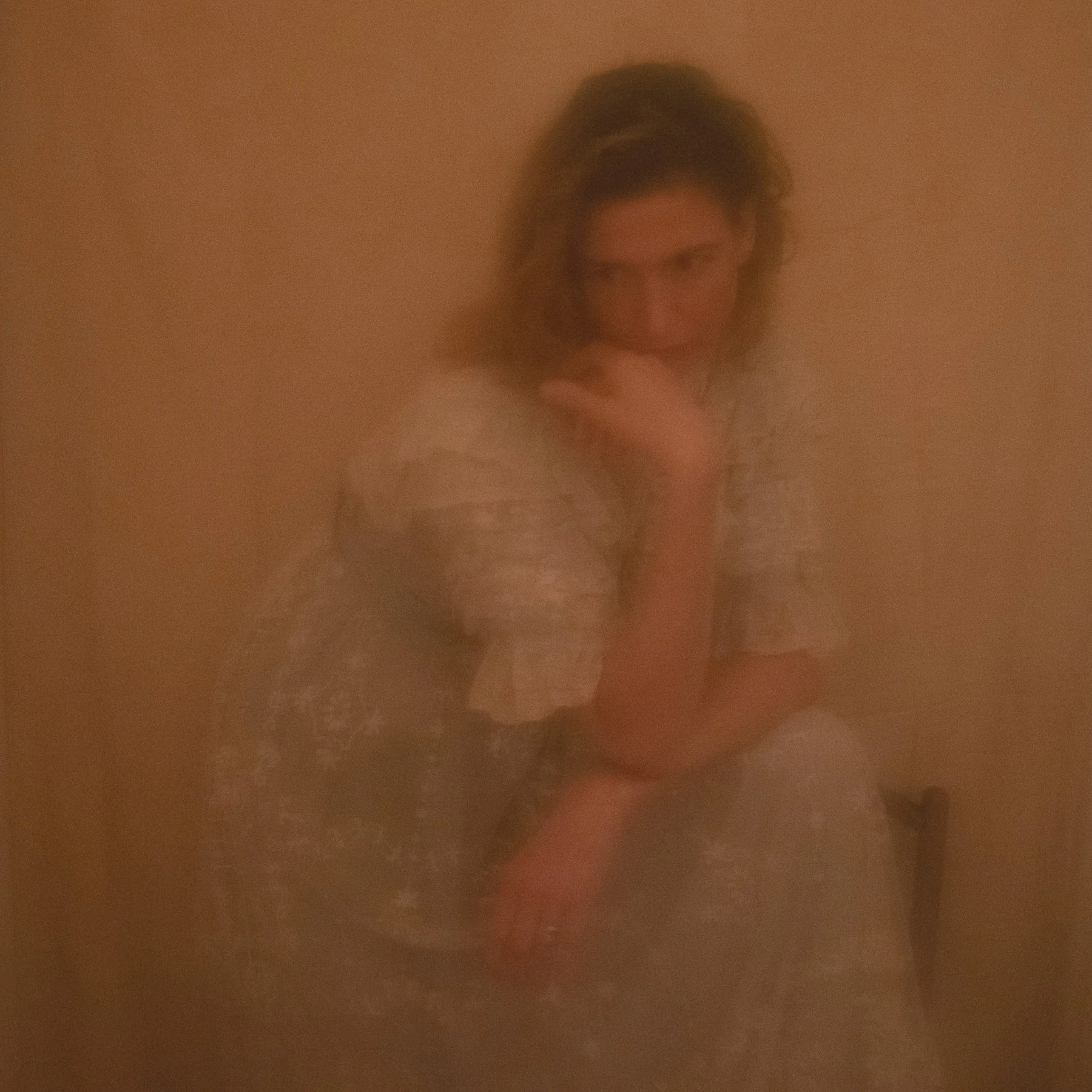
A woman sits hunched in a ruffled white dress, her chin on her hand and her face half turned away, veiled in orange light. It is a photograph by Valentina, and in her words nothing in it is placed by chance: “even the smallest detail can be fundamental to give meaning to the whole”.
“Everything is decided before the shot,” she said in her interview with us. For her, the hardest part of the work was what came before the photograph: the research, the construction of the scene, the choice of clothes, objects and materials. A project could start from an object, a face, a drawing or an image that took shape in her mind. From there one element called up the next, until a world slowly began to appear. She thought of her photographs as small imaginary universes, each with its own identity and atmosphere. “When I arrive to photograph,” she said, “in a certain sense the image already exists: I only have to give it a real form.”
This article gathers a mix of her work, fashion and personal projects side by side, as she asked.
A character that belongs to the person
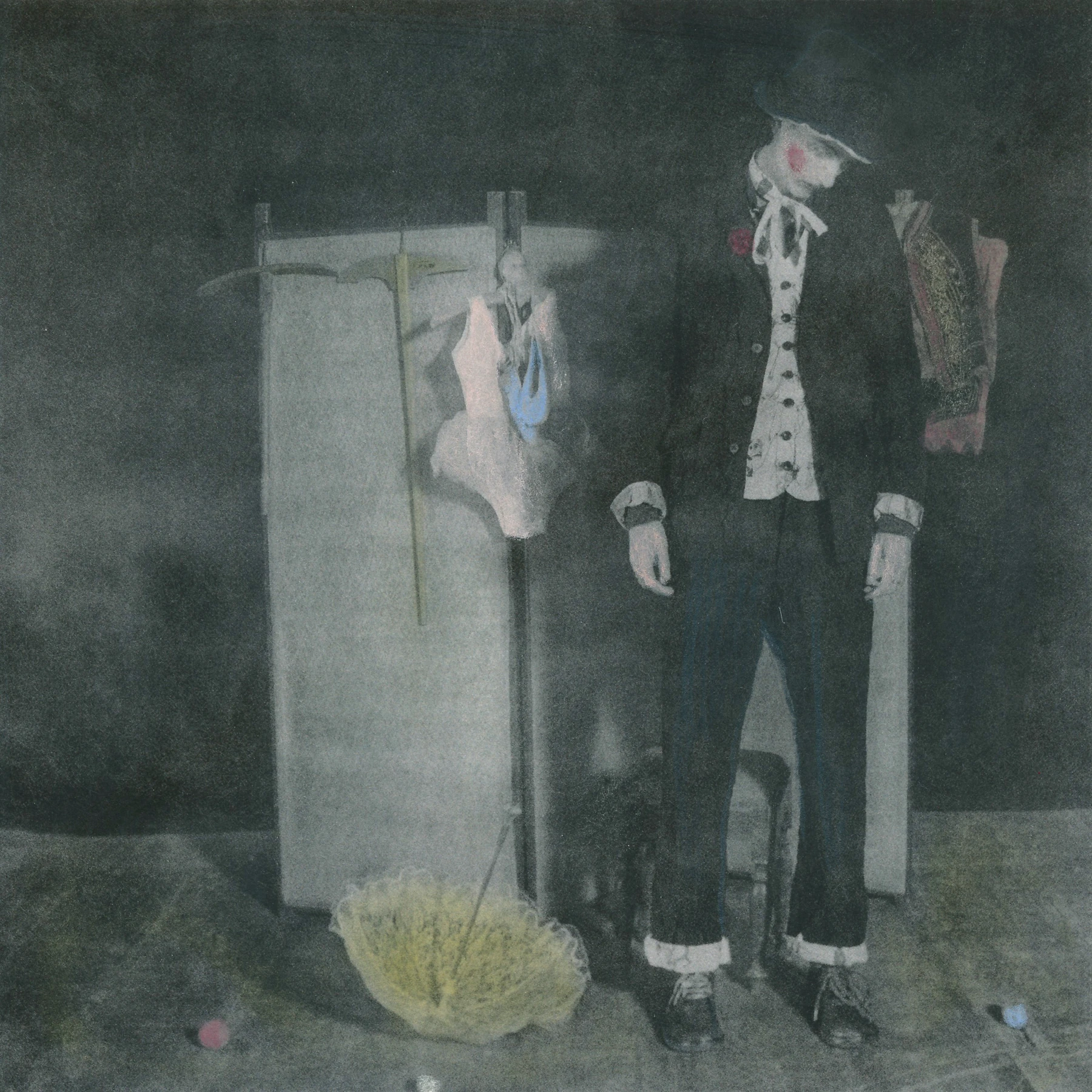
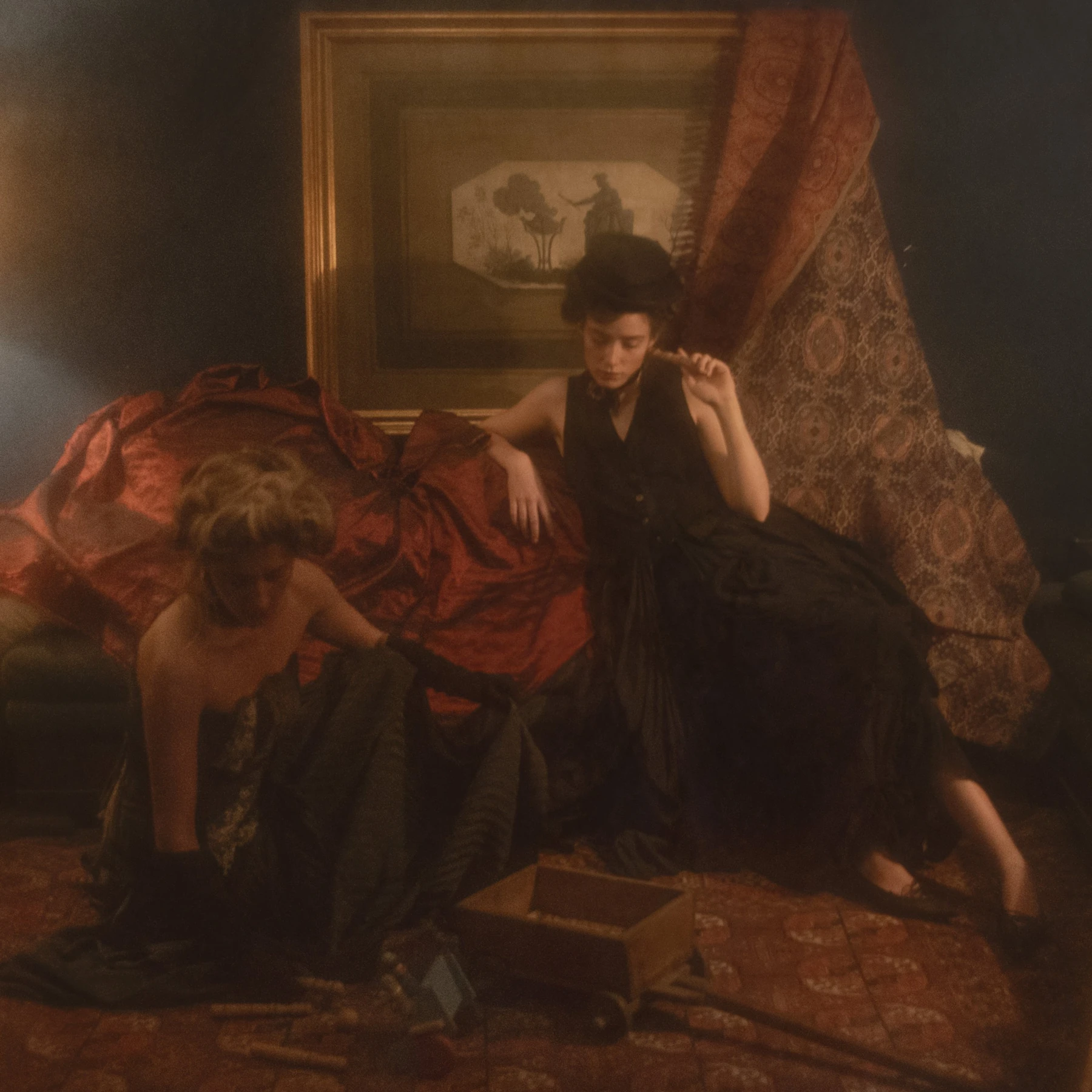
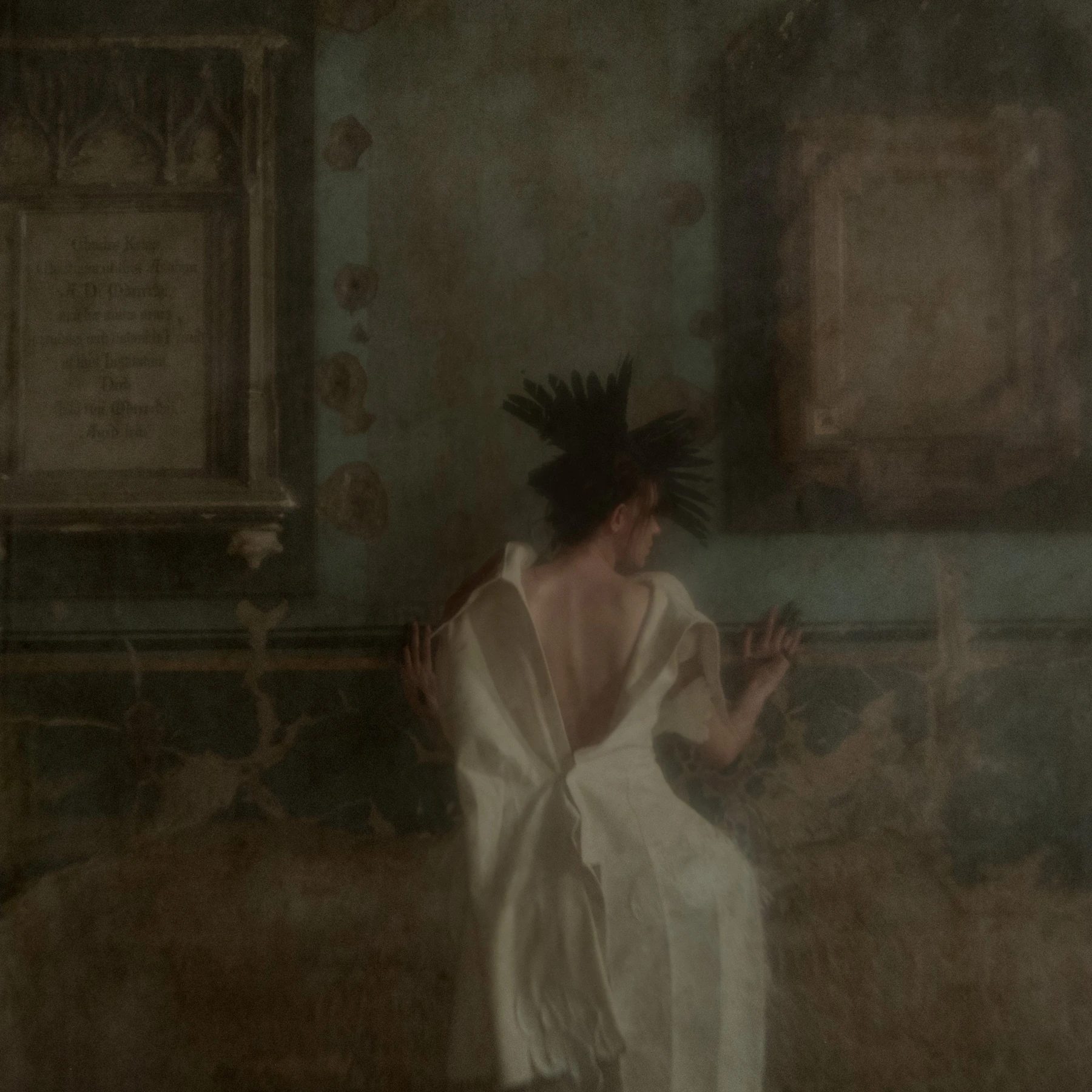
A figure in a dark tailcoat, with a white bow at the neck and a hat pulled low, stands beside a folding screen hung with a tutu and a pickaxe. A yellow lace parasol lies open on the floor. Two women rest in a parlour of red silk and patterned cloth under a gilt frame, one of them in a black hat and waistcoat. Another, seen from behind against a faded fresco, wears a white dress open to the waist and a crown of black feathers.
Valentina said the idea was to create characters “without ever moving too far from the true nature of the person I photograph”. She often needed to know the sitter first, to build a relationship and decide together which direction the character could take. In her personal projects she preferred to work with actors and actresses, people used to fiction and to entering other identities. Yet what she looked for was almost the opposite of acting: that the person remained herself while wearing the character, and that the character in some way belonged to her. “I am fascinated by this possibility,” she said.
“Inventing a character to reveal something authentic.”
She handled the visual research and the creative direction herself. For make-up and hair she worked with professionals. For costumes she often drew on her own archive, collected and enlarged over time, and in other cases she worked with costume designers, designers and brands. In costume she found “a dimension more tied to time and memory”, where a dress could tell an era, evoke a person, “a previous life”.
Persona
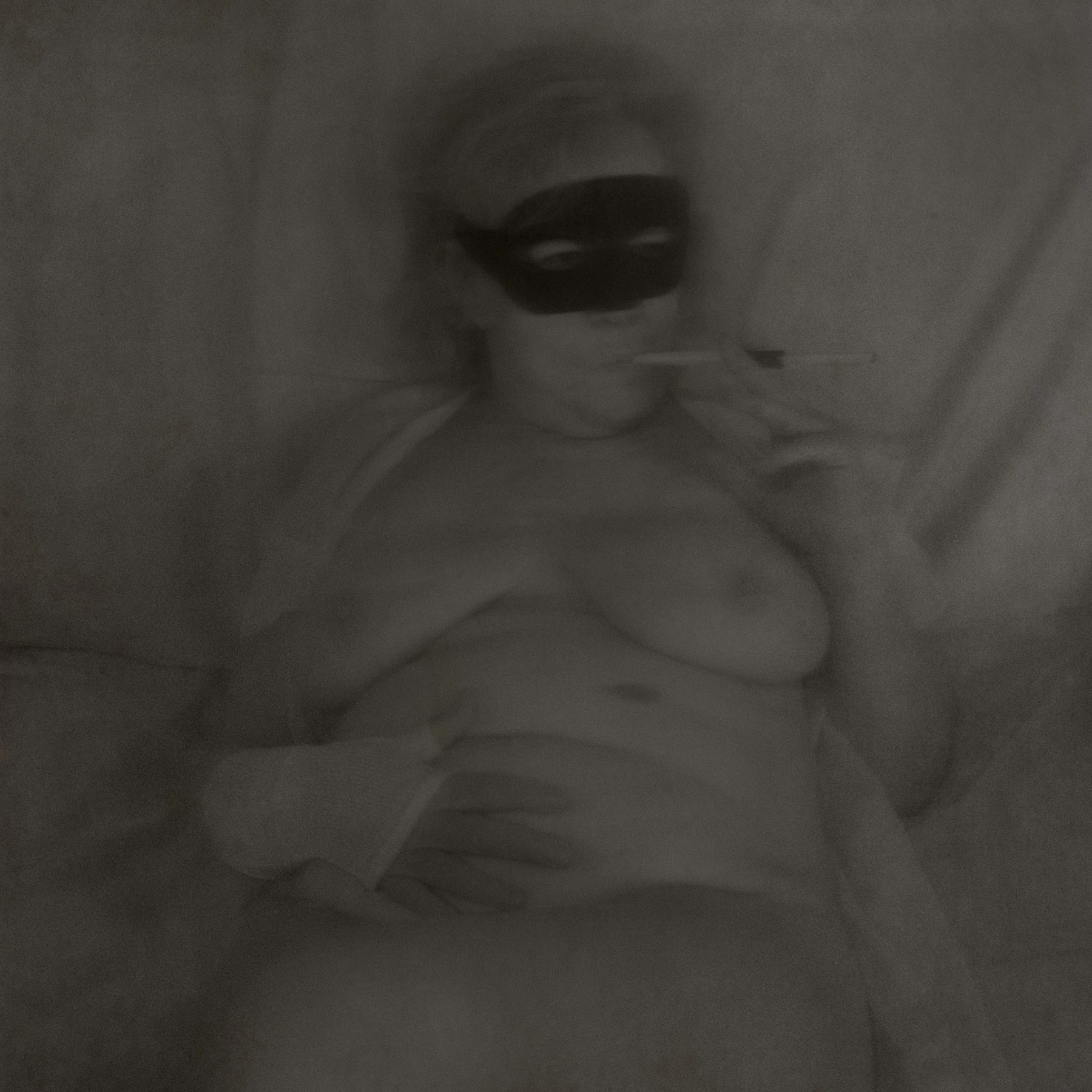
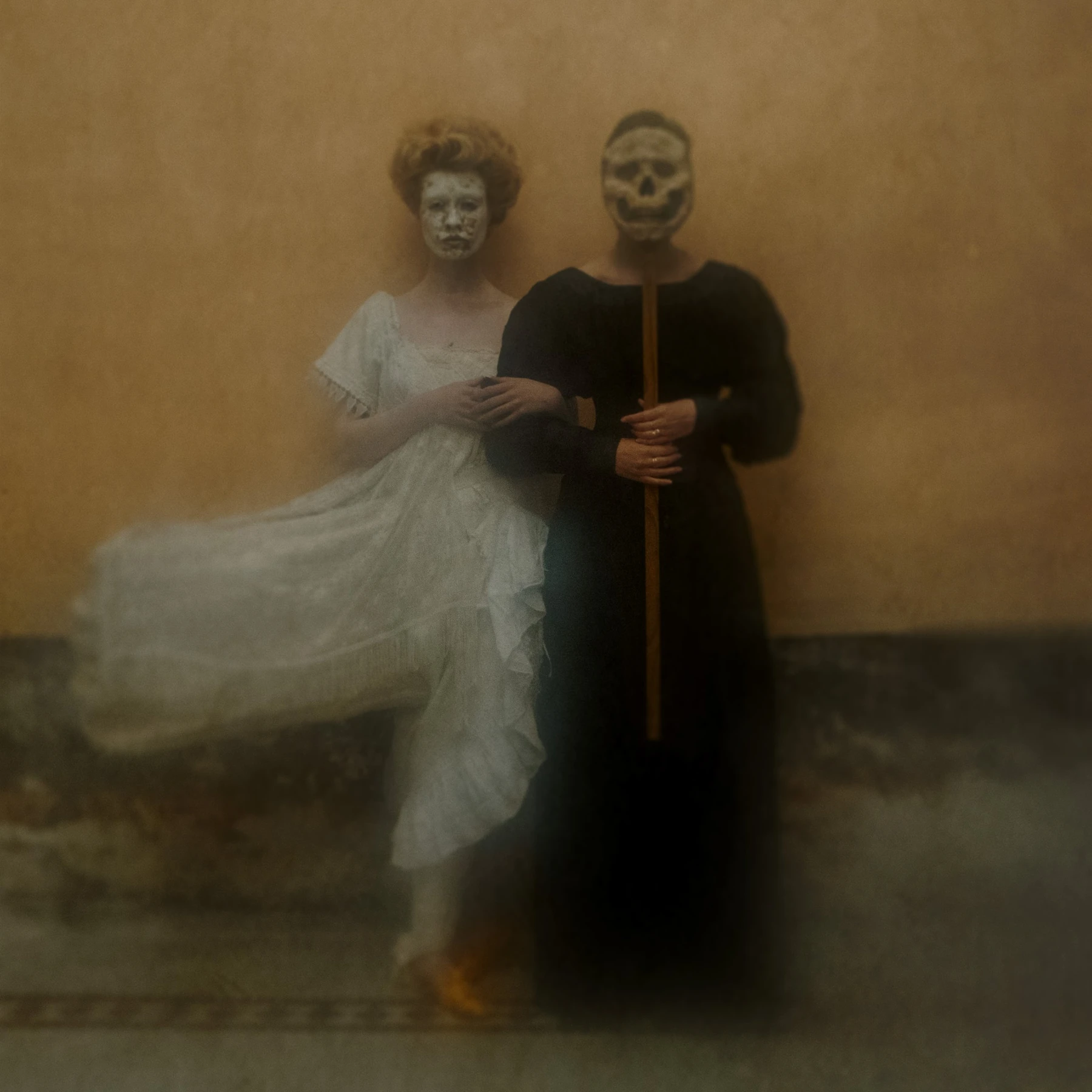
Masks appear in some of these photographs. A woman in a white dress, her face painted white and spotted like worn plaster, stands arm in arm with a figure in black who holds a skull mask on a stick in front of her face. In another image a figure lies against grey sheets, eyes hidden by a black domino mask, a cigarette between the lips.
“For me photography is a form of theatre,” she said, “but deep down I believe life itself is too.” Every day, in her words, we play roles and wear masks, sometimes knowingly, sometimes without realising it. She pointed to the origin of the word persona: the Latin persōna, of Etruscan origin, which meant a theatrical mask, “as if identity had always been tied to representation”. For this reason the mask held an important place in her imagery. “It is not only something that hides, but also something that reveals.” The other objects in her photographs belonged to the same symbolic universe. They interested her for the stories they evoked and the memory they kept.
Movement and blur
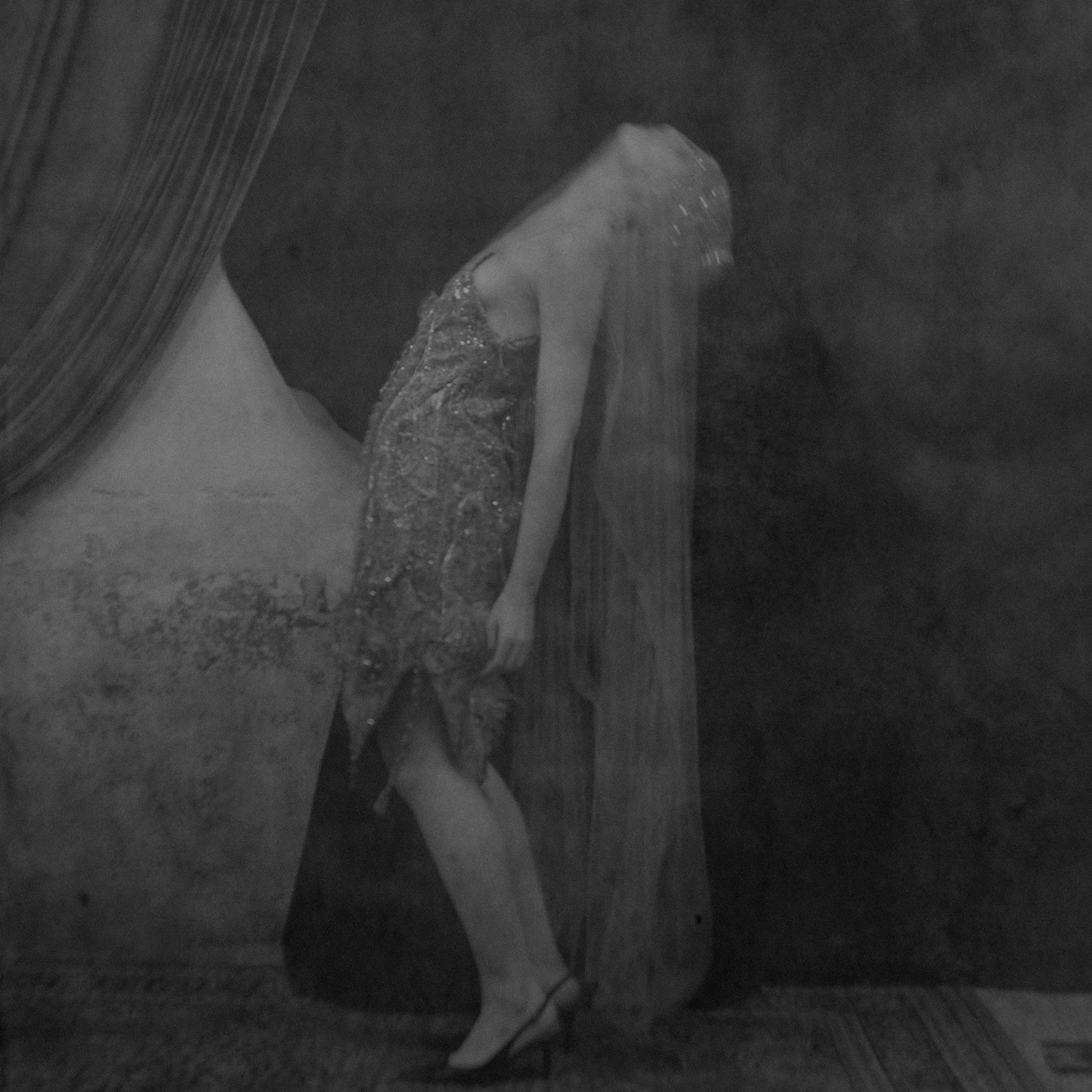
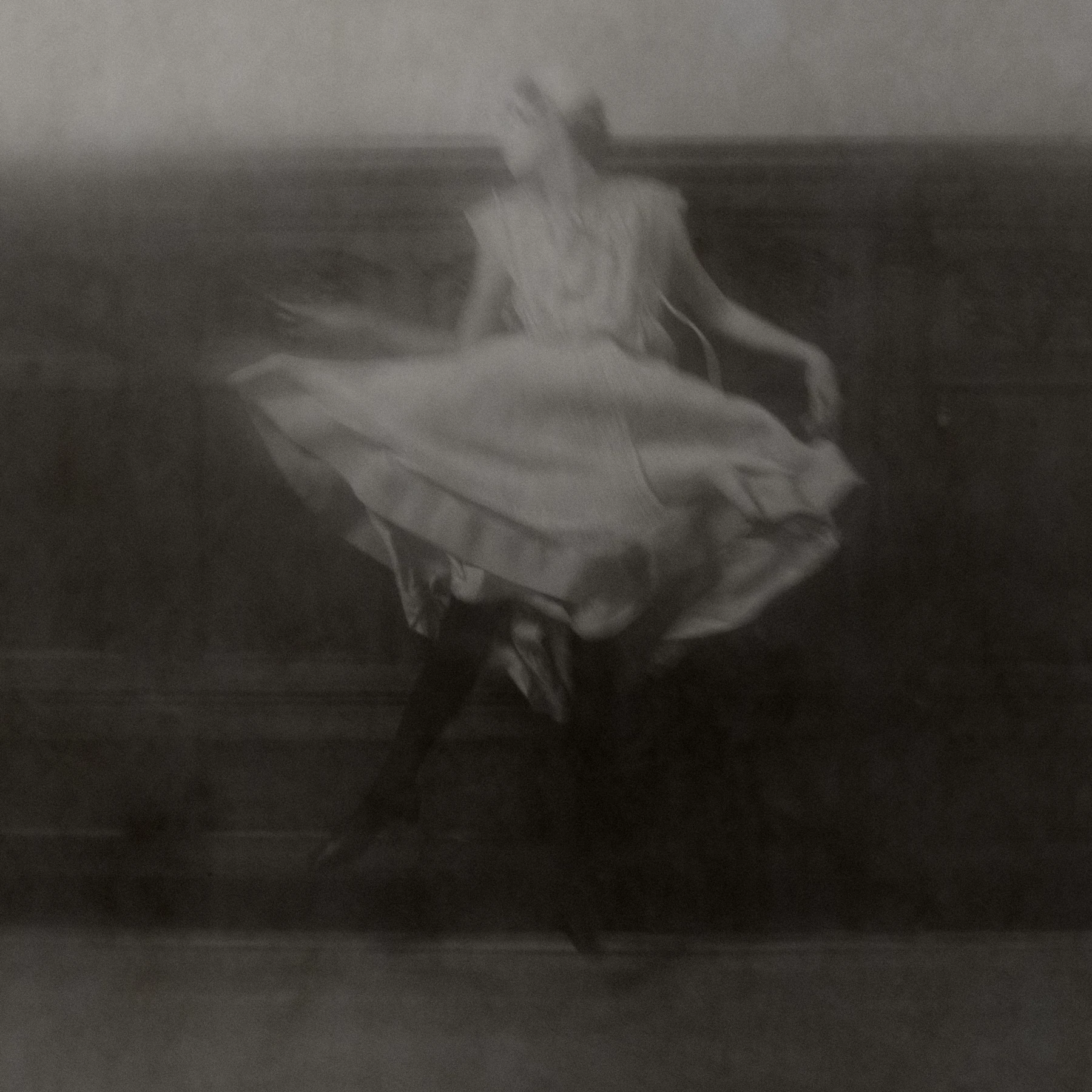
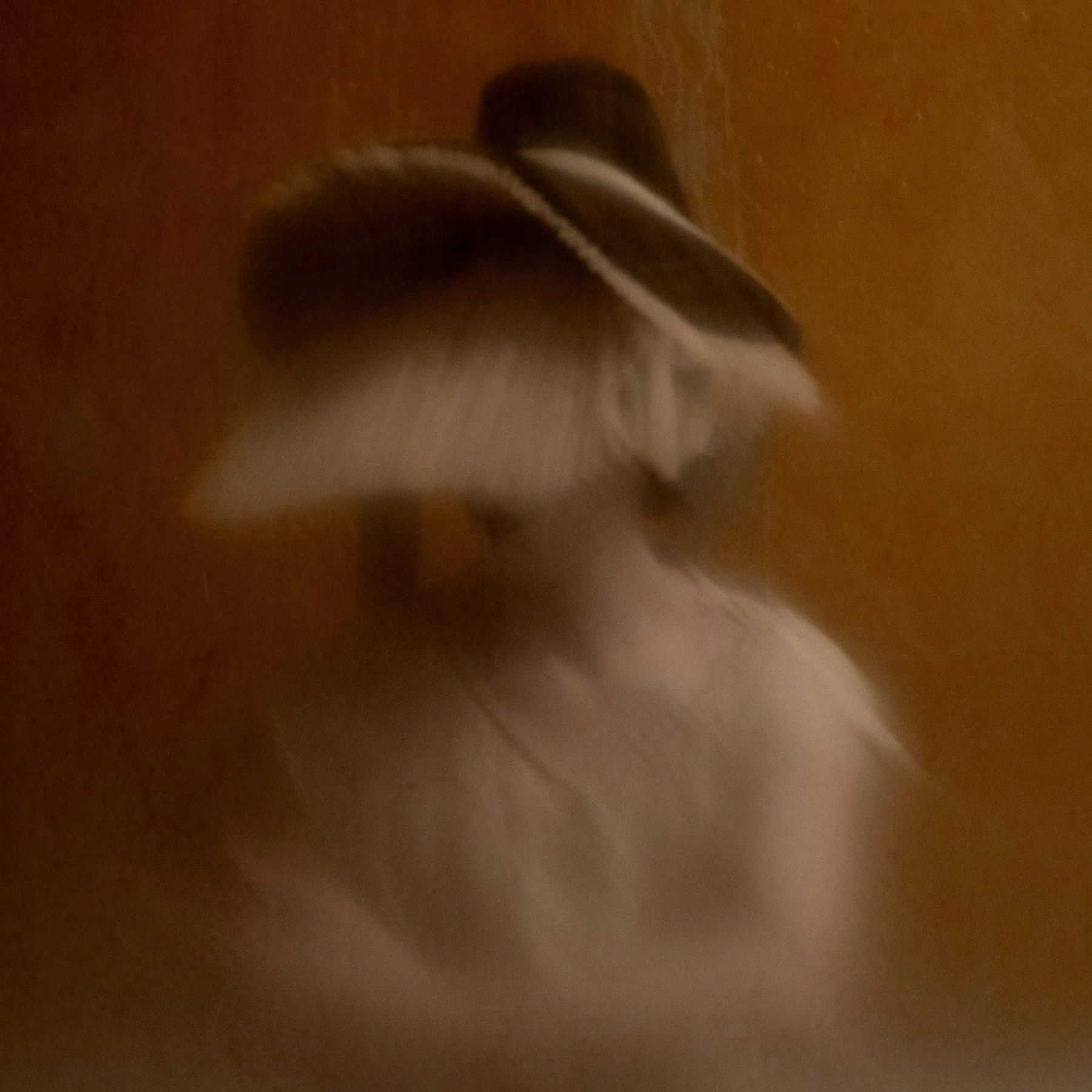
In some photographs the face is hidden or lost. A dancer turns in white and becomes a single blurred shape of fabric against a dark wall. A woman bends backwards in a beaded dress, her head lost behind a long veil, beside a draped curtain and a painted backdrop. A figure under a wide hat dissolves into orange light.
She did not tie herself to one technique. Every image, she said, required its own approach, depending on the atmosphere she wanted to create. “Technique, for me, is a tool at the service of the image, never the opposite.”
The first portraits
Photography came to her through its history. Studying it at the Academy, with its early techniques, she was struck above all by the first portraits, and by the feeling that people who had lived so long ago “were still present in the photographs, as if something of them had remained imprisoned in the image”. Her influences came from many fields. She was drawn to pictorialism and to portraits from the early twentieth century, to Madame d’Ora and Adolph de Meyer, and to Claude Cahun for her research on identity and transformation. In fashion photography she named Sarah Moon, for her personal, dreamlike language; beyond photography, surrealism and the cinema of Sergei Parajanov. She was also deeply fascinated by dance, theatre, painting and costume, and often searched for old portraits of dancers, actresses and forgotten figures, many of them anonymous. Her imagery, she said, was formed by collecting all of this, “without any real distinction between the different artistic disciplines”.
She kept a personal collection of antique photographs and several archives of her own, which she continued to enrich and organise. “For me, collecting and preserving is already part of the creative process,” she said.
Fifty per cent
“I have always thought that photographs, if they are not printed, exist only at fifty per cent,” she said. She was slowly printing her whole body of work, choosing the format for each image, convinced that format, paper and the material of the print were part of the photographic language.
Asked which film she felt close to her imagery, she named Paul Thomas Anderson’s “Phantom Thread”, and its gesture of hiding small objects and messages inside the lining of a dress. It was, she said, the possibility “of leaving an imprint of ourselves in what we create”.