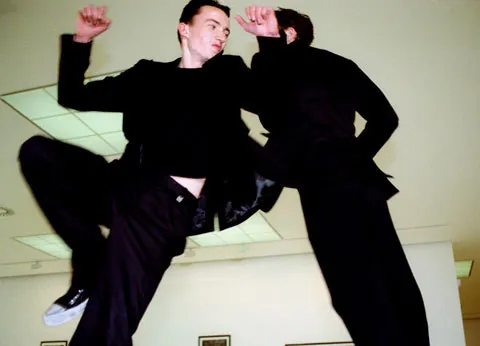
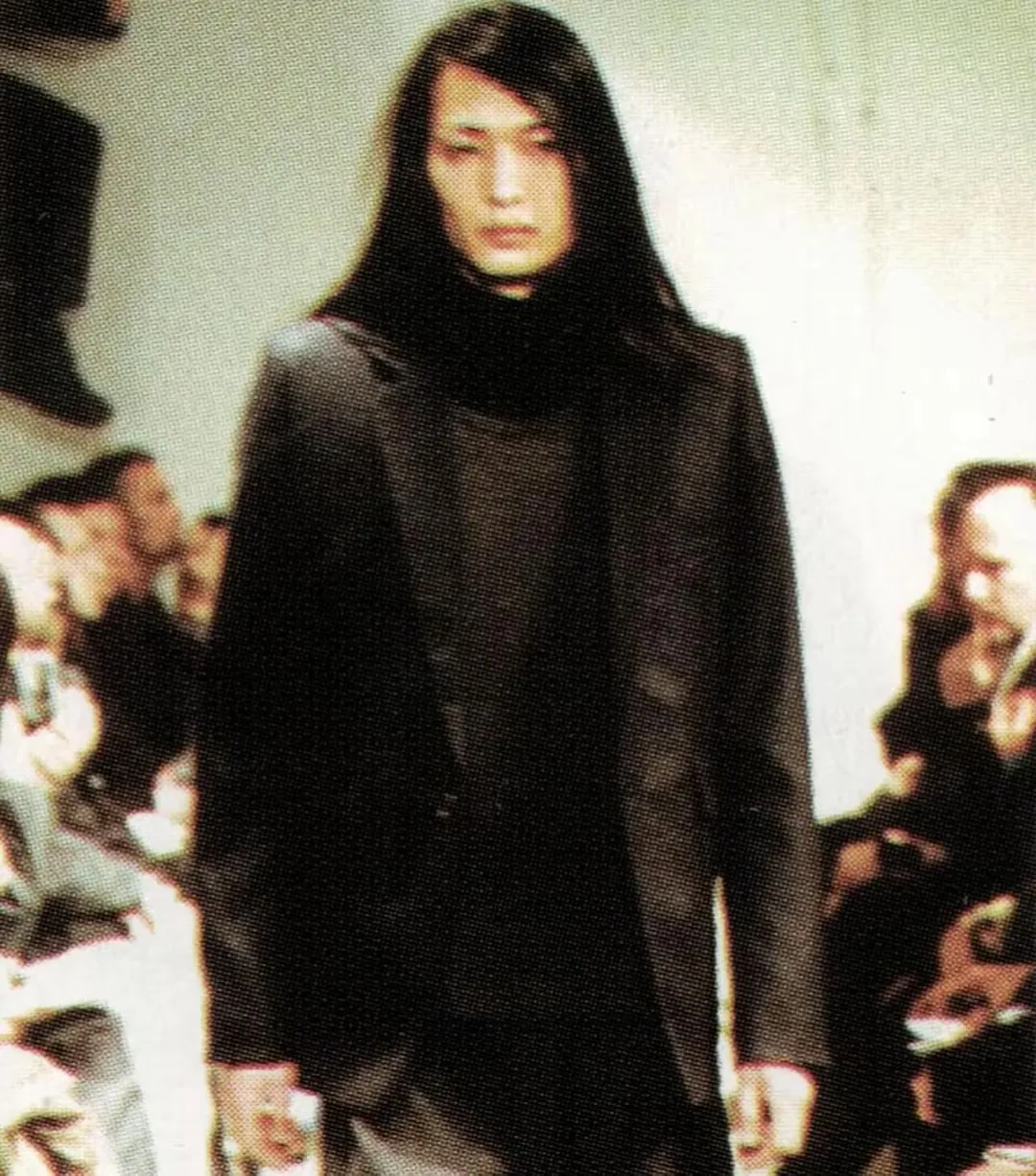
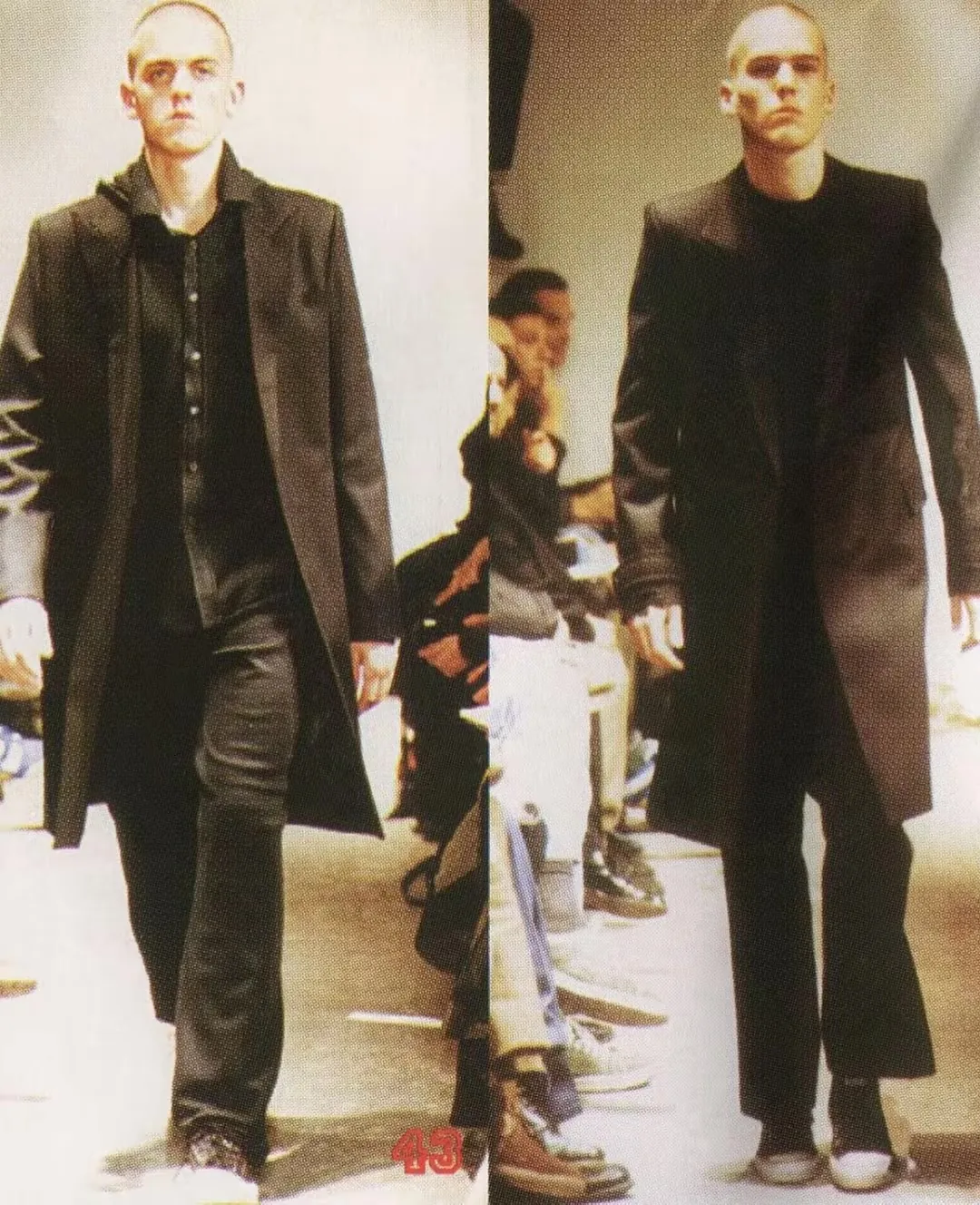
From the mid-1990s Helmut Lang advertised his label without showing it. The pages he bought carried a name, a few lines of text, an object or a body seen from an unexpected angle — almost never a look from the collection.
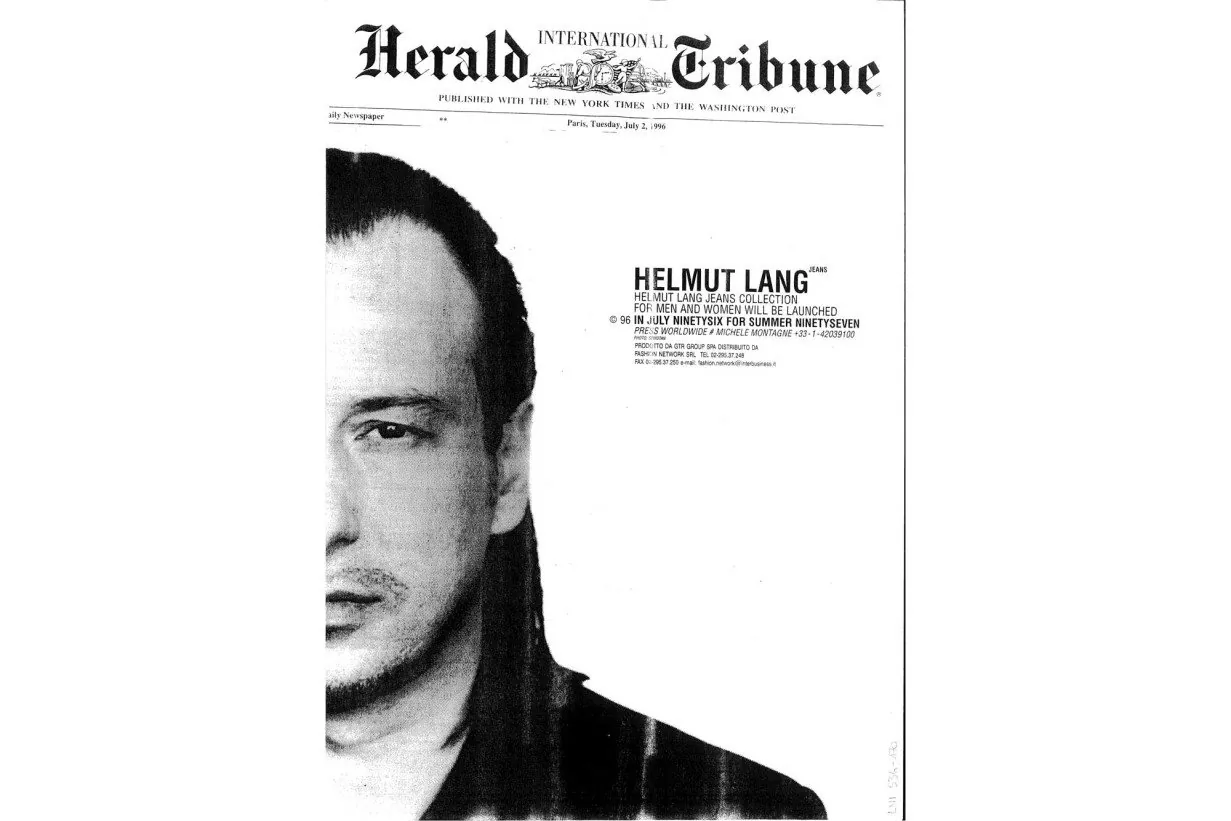
The approach is already complete in July 1996: a wraparound on the International Herald Tribune announcing Helmut Lang Jeans [9]. A cropped portrait by Elfie Semotan, the name, and a few lines of type stating that the collection would be launched for summer 1997.
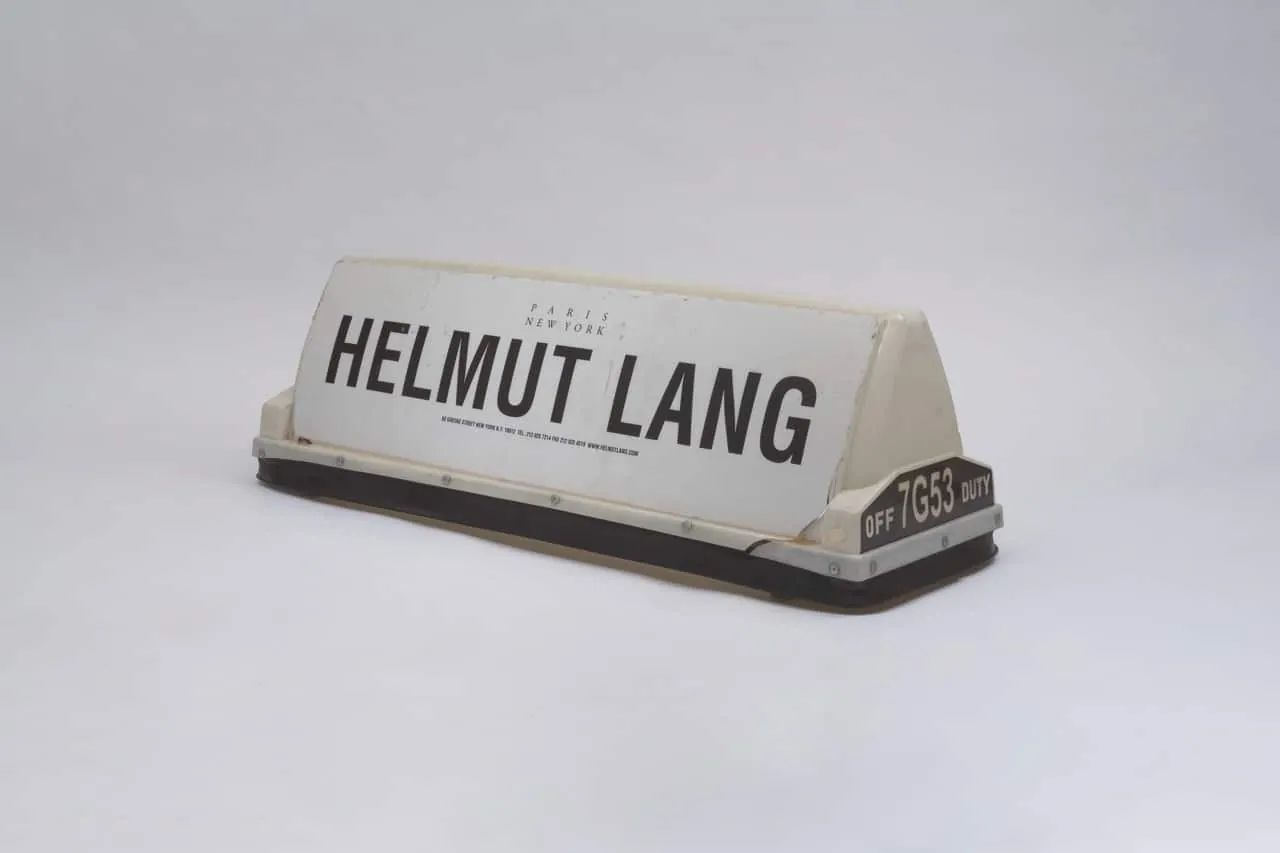
In 1998, the year he presented a collection online, Lang put his name on the roofs of New York: more than a thousand taxi-top ads pointing to the new website [6]. No image — only HELMUT LANG, Paris New York, the Greene Street address and www.helmutlang.com.
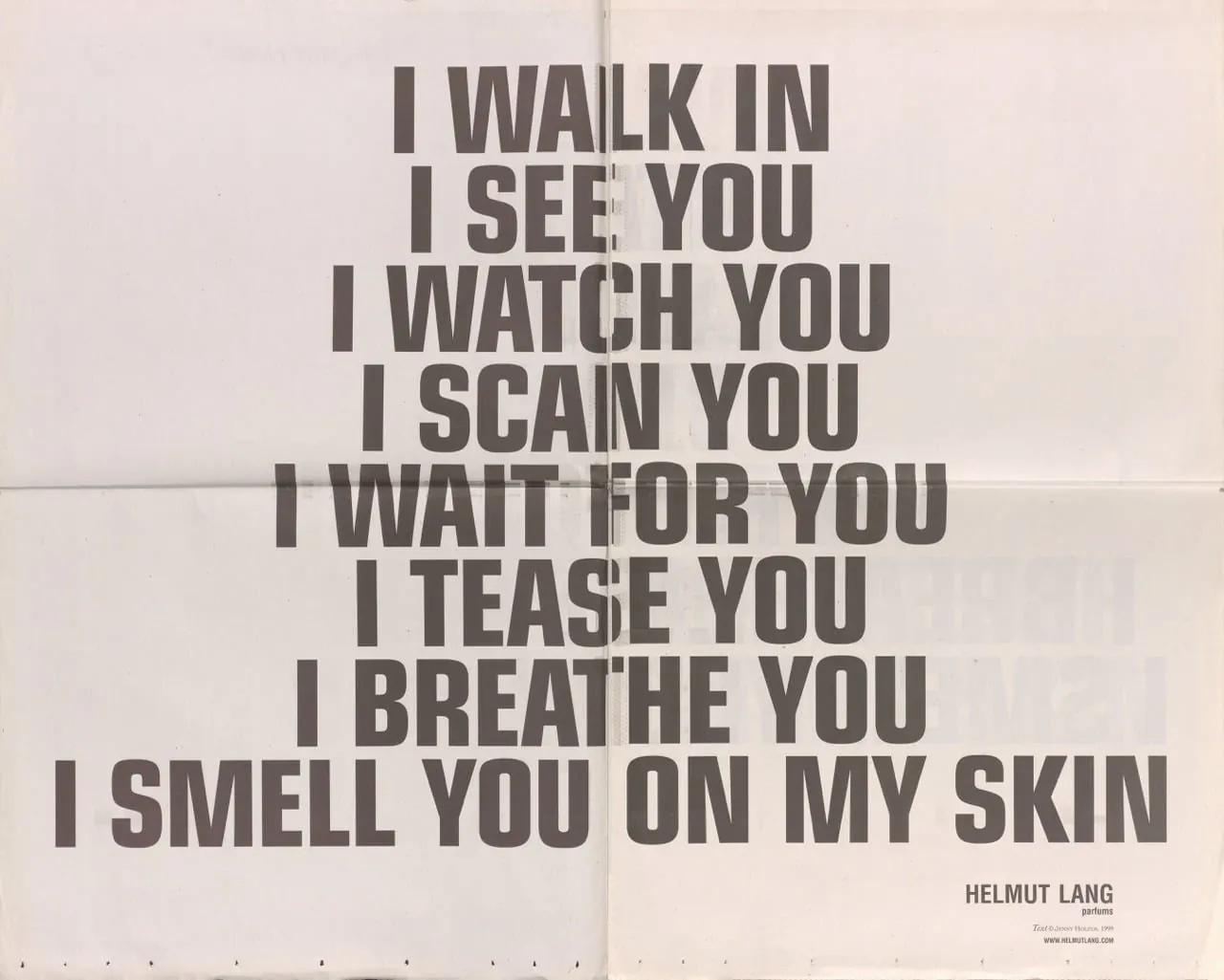
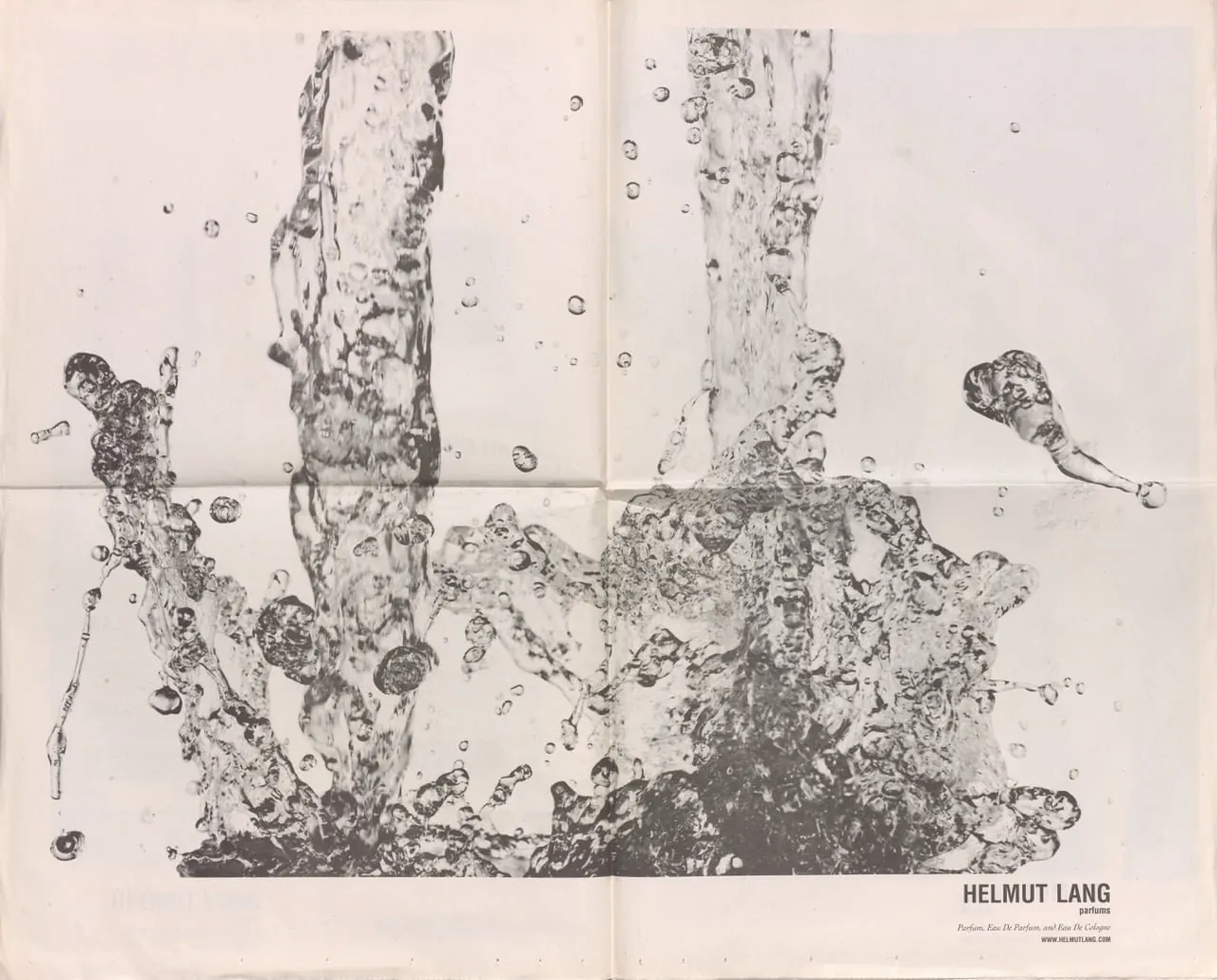
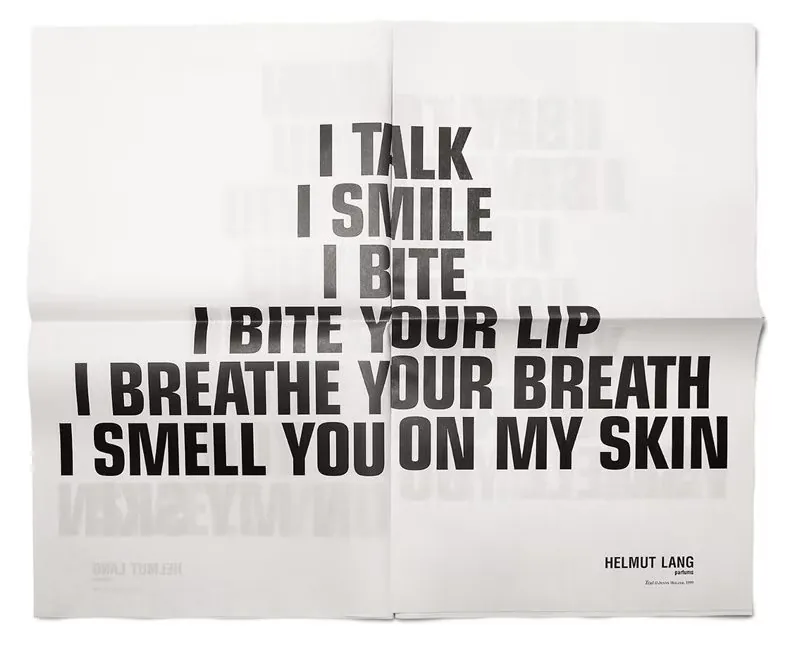
Helmut Lang Parfums were introduced through Jenny Holzer’s words [10]. Newspaper supplements, among them one inserted in The New York Times in 2001, printed only her text in heavy black type — “I walk in, I see you … I smell you on my skin” — with no bottle and no model [1]. Others showed only water, photographed by Larry L. Miller [7].
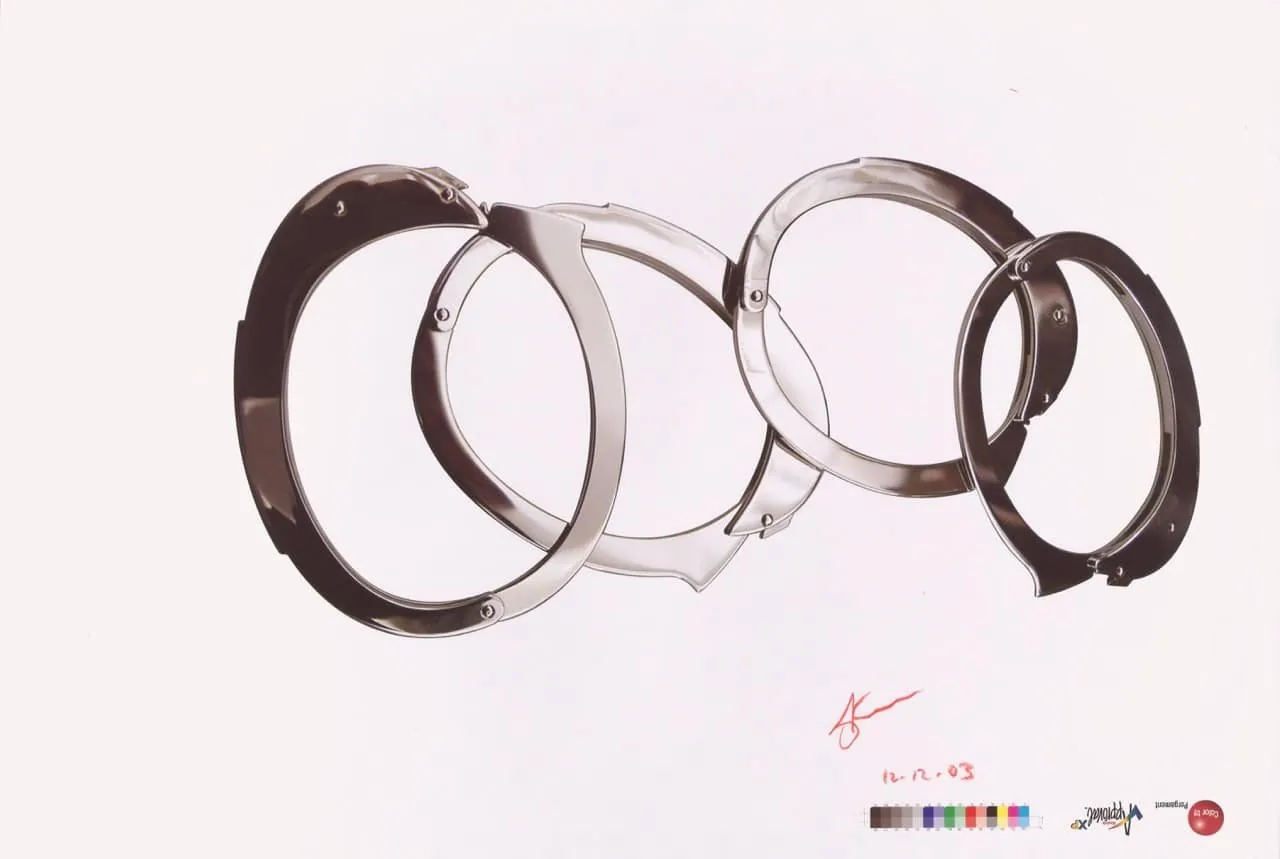
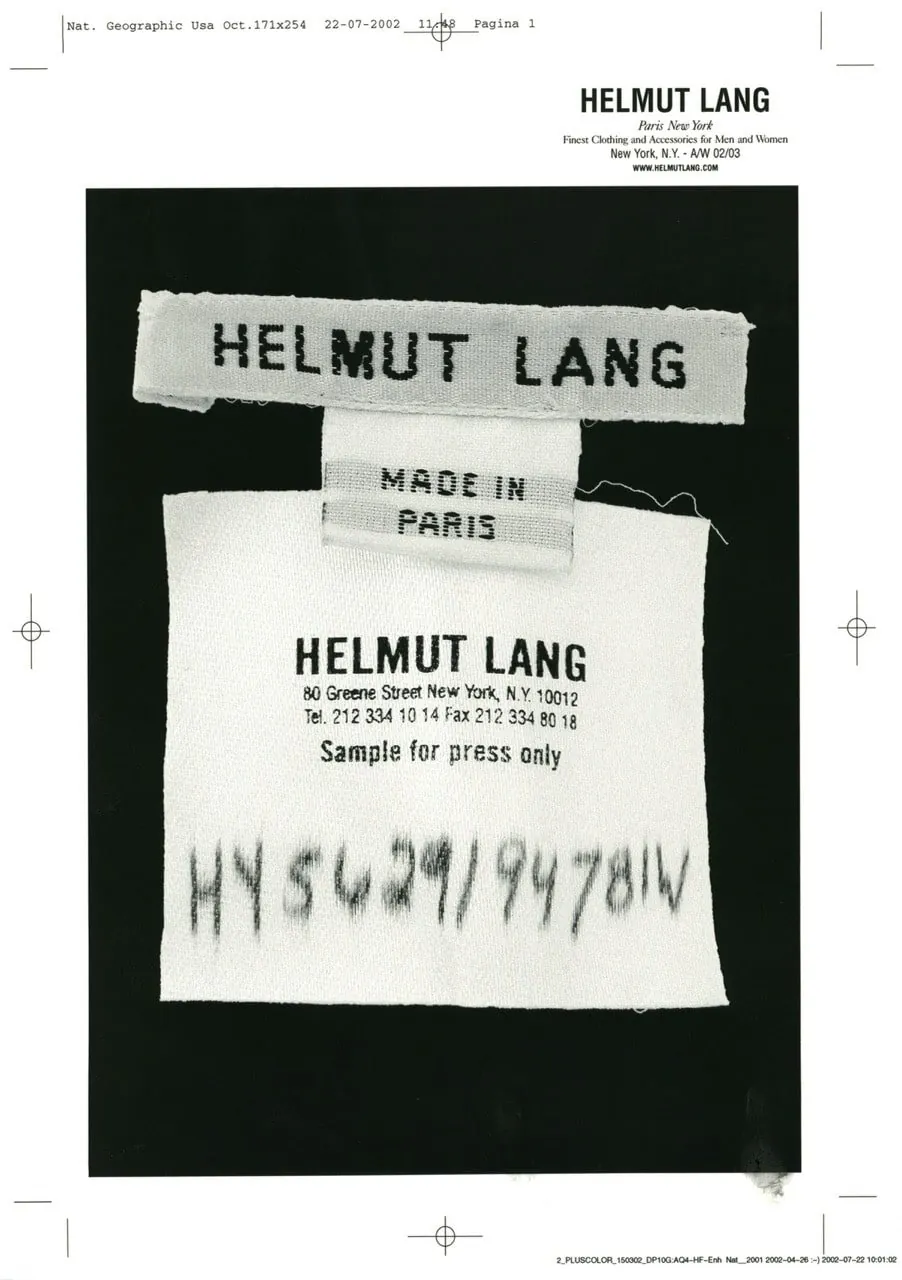
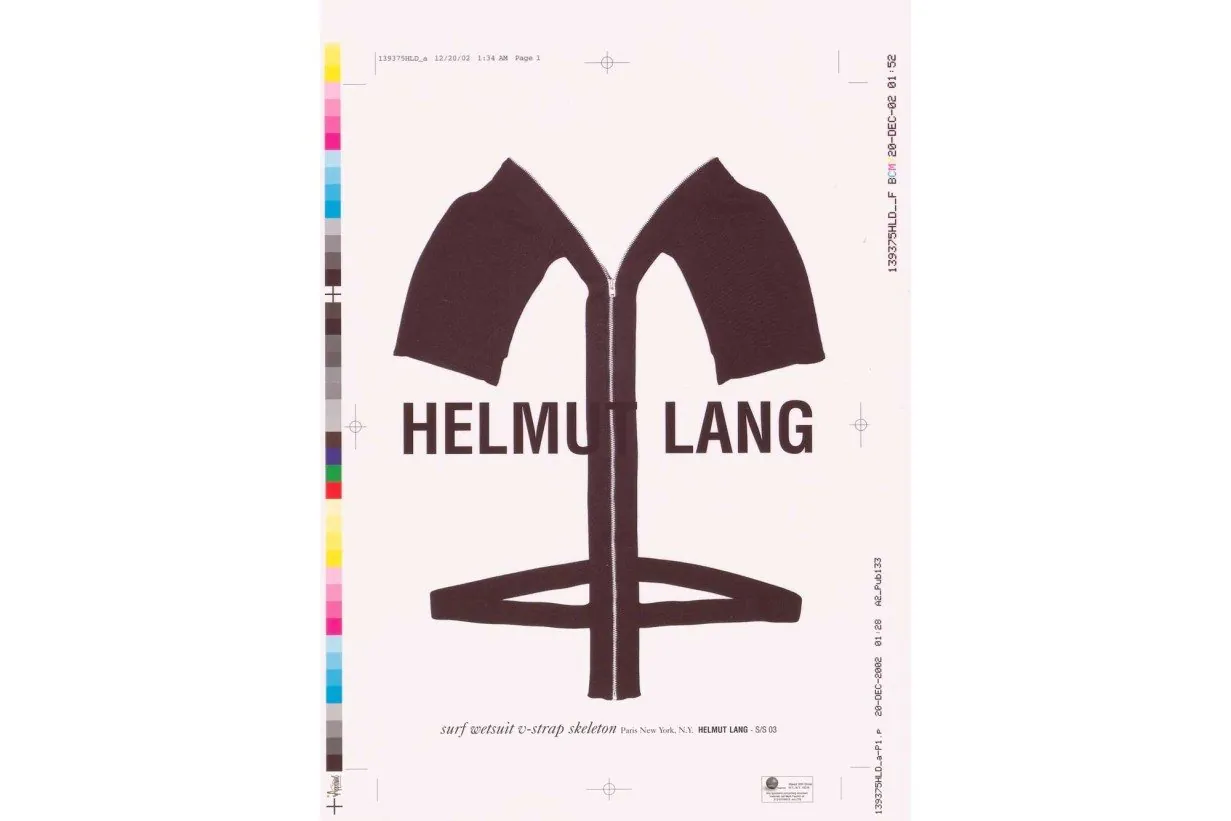
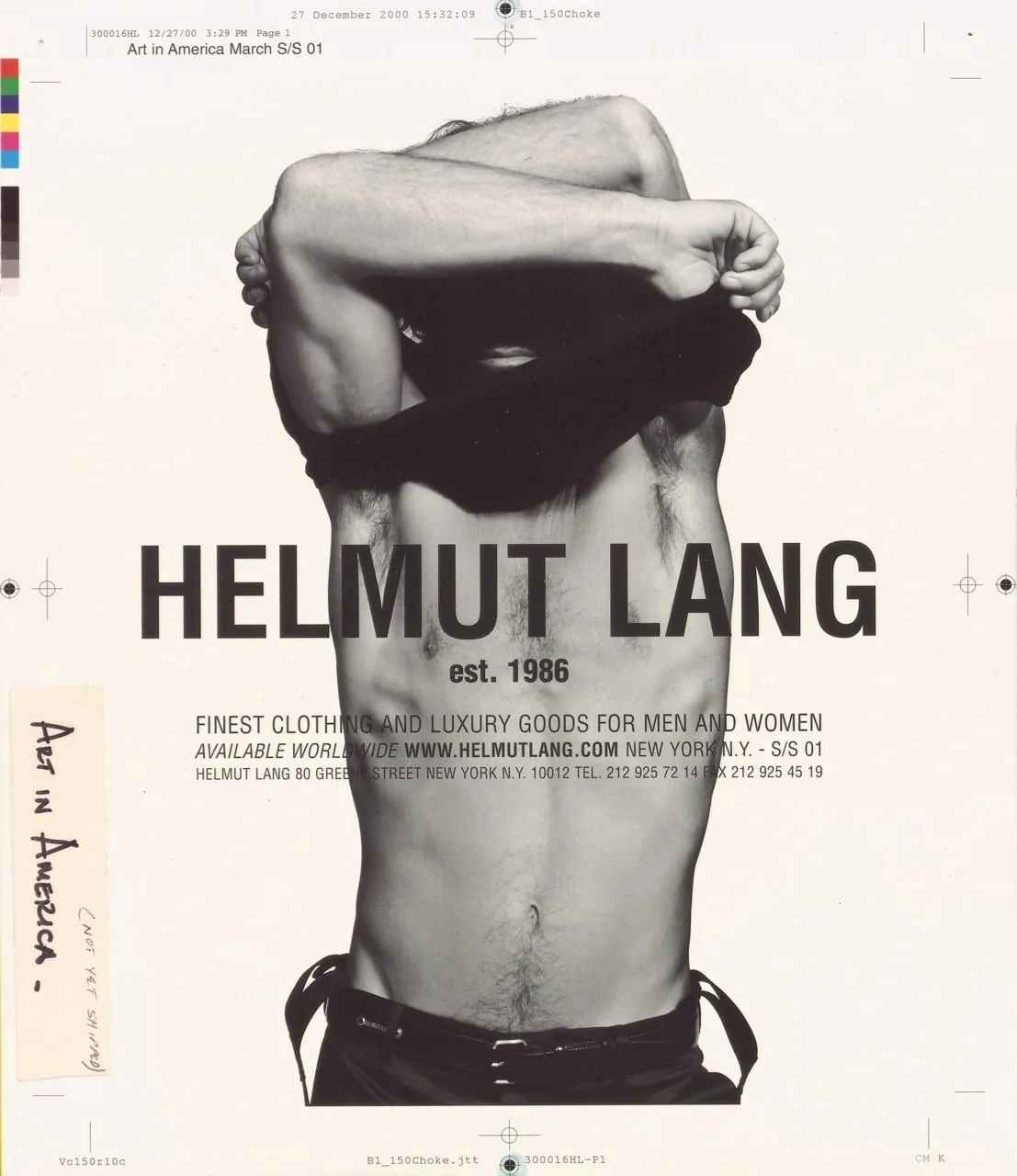
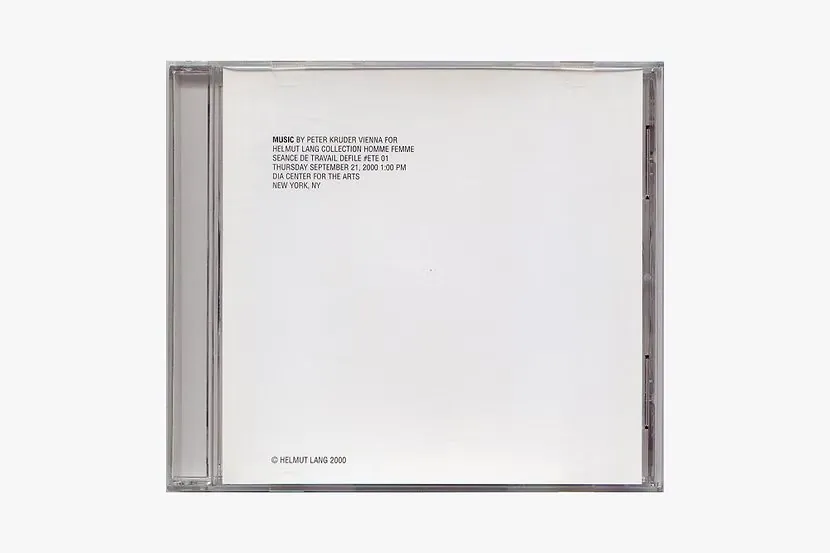
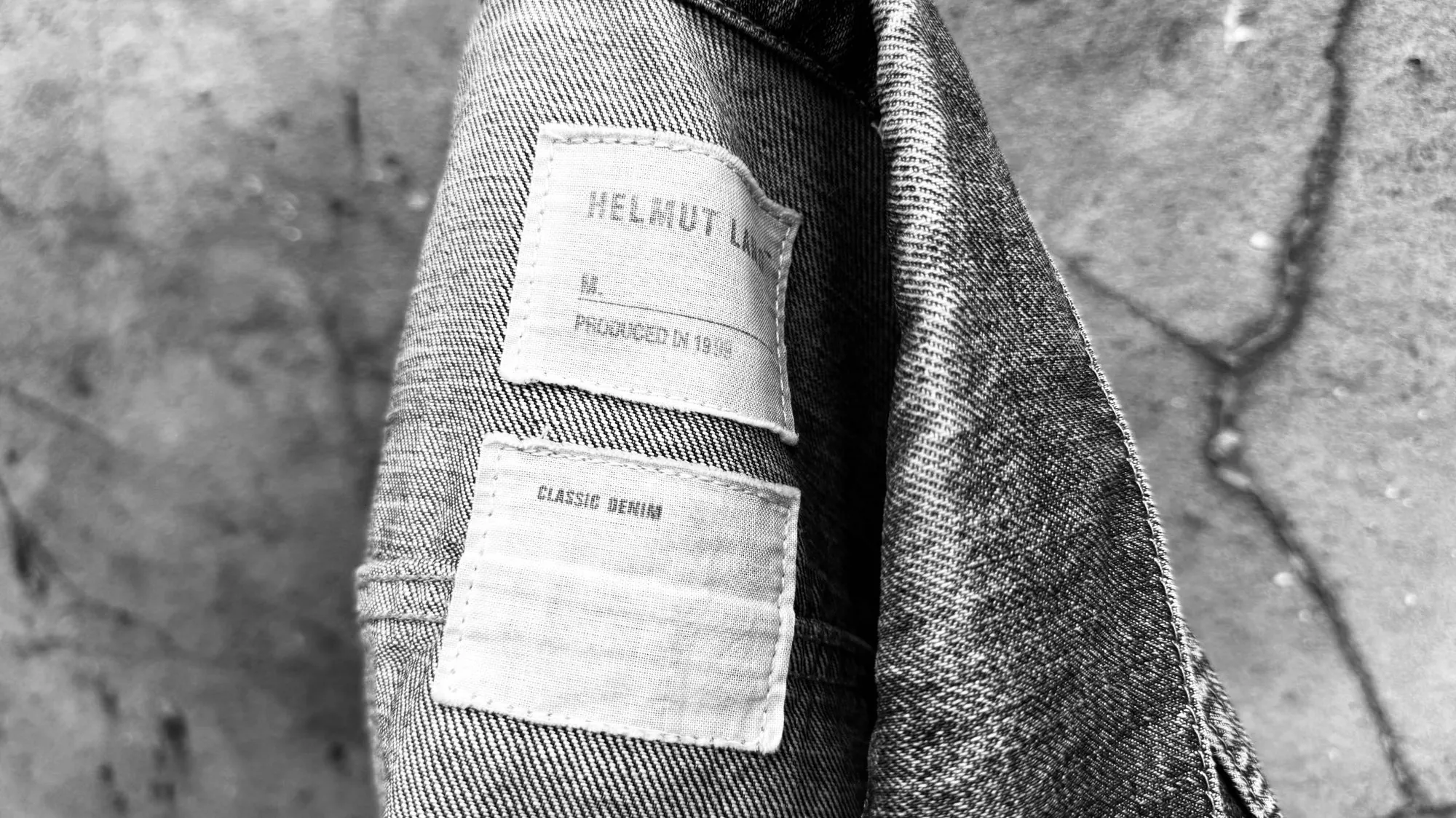
The same logic runs through the magazine pages. In Art in America, March 2001, a torso pulling a shirt over its face [5]. In National Geographic, October 2002, a garment label stamped “Sample for press only” [3]. For Spring/Summer 2003, the “surf wetsuit v-strap skeleton” reduced to a flat silhouette behind the logo [4]. In 2003, four bracelets locked together like handcuffs [2]. Even the music of the shows became an object: a CD for the Séance de Travail of 21 September 2000 at the Dia Center for the Arts, music by Peter Kruder [8].
The choice of media was part of the message. An art magazine, a geography magazine, a newspaper, a taxi: Lang placed his name where fashion was not expected and treated every support with the same care. “All has equal weight,” he said — in his archive a taxi top sits beside an evening gown with the same dignity.
The images shown here are the original press proofs and printed matter — crop marks, colour bars and handwritten notes included. They belong to the MAK Helmut Lang Archive in Vienna, presented in the exhibition Helmut Lang. Séance de Travail 1986–2005, opened at the MAK in December 2025.
Dalla metà degli anni Novanta Helmut Lang pubblicizza il suo marchio senza mostrarlo. Le pagine che compra portano un nome, poche righe di testo, un oggetto o un corpo visto da un’angolazione inattesa — quasi mai un look della collezione.
L’approccio è già compiuto nel luglio 1996: una sovracoperta dell’International Herald Tribune annuncia Helmut Lang Jeans [9]. Un ritratto tagliato di Elfie Semotan, il nome e poche righe di testo che dicono che la collezione sarà lanciata per l’estate 1997.
Nel 1998, l’anno in cui presenta una collezione online, Lang porta il suo nome sui tetti di New York: più di mille pubblicità sui taxi che rimandano al nuovo sito [6]. Nessuna immagine — solo HELMUT LANG, Paris New York, l’indirizzo di Greene Street e www.helmutlang.com.
Helmut Lang Parfums viene presentato attraverso le parole di Jenny Holzer [10]. Inserti di giornale, tra cui uno nel New York Times del 2001, stampano soltanto il suo testo in caratteri neri e pesanti — “I walk in, I see you … I smell you on my skin” — senza flacone e senza modelli [1]. Altri mostrano soltanto acqua, fotografata da Larry L. Miller [7].
La stessa logica attraversa le pagine delle riviste. Su Art in America, marzo 2001, un busto che si tira la maglia sul volto [5]. Su National Geographic, ottobre 2002, un’etichetta con la scritta “Sample for press only” [3]. Per la Primavera/Estate 2003, la “surf wetsuit v-strap skeleton” ridotta a una silhouette piatta dietro al logo [4]. Nel 2003, quattro bracciali chiusi l’uno nell’altro come manette [2]. Perfino la musica delle sfilate diventa un oggetto: un CD per la Séance de Travail del 21 settembre 2000 al Dia Center for the Arts, musica di Peter Kruder [8].
La scelta dei supporti fa parte del messaggio. Una rivista d’arte, una rivista di geografia, un quotidiano, un taxi: Lang mette il suo nome dove la moda non è attesa e tratta ogni supporto con la stessa cura. “All has equal weight”, diceva — nel suo archivio il tetto di un taxi sta accanto a un abito da sera con la stessa dignità.
Le immagini qui raccolte sono le prove di stampa originali e i materiali stampati — segni di taglio, barre colore e note a mano compresi. Fanno parte del MAK Helmut Lang Archive di Vienna, presentato nella mostra Helmut Lang. Séance de Travail 1986–2005, inaugurata al MAK nel dicembre 2025.