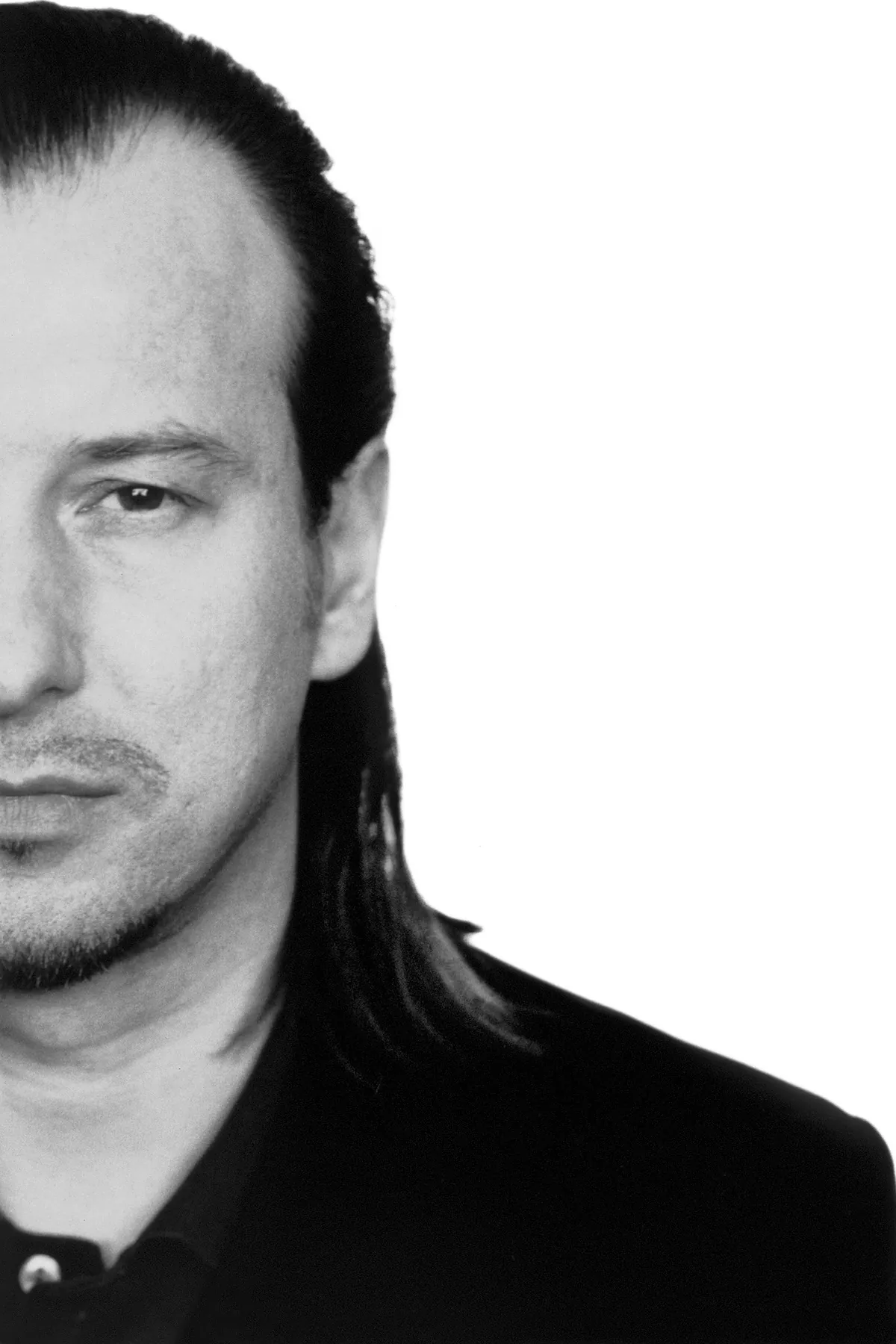
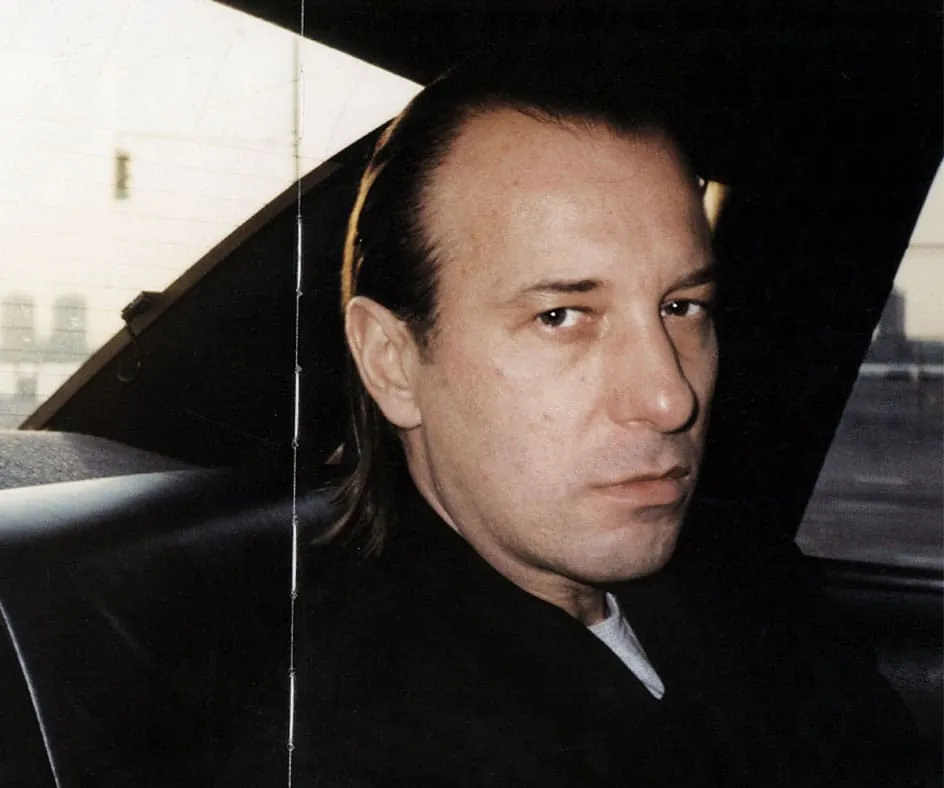
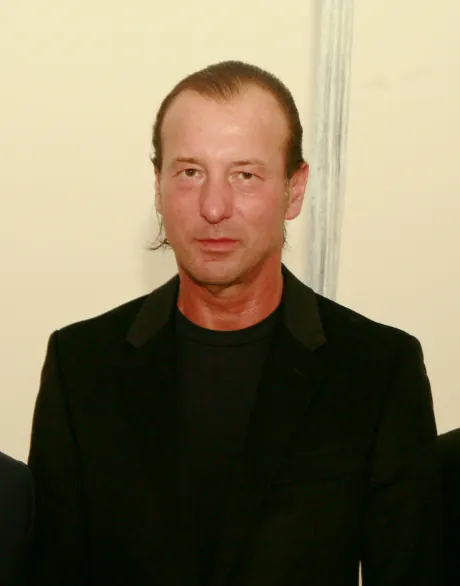
The Austrian designer who reduced 1990s fashion to cut, material and attitude, moved his house to New York, showed the first collection on the internet, and left fashion in 2005 to work as an artist.
In the summer of 2011, at the Fireplace Project gallery in East Hampton, Helmut Lang showed sixteen white columns that ran from floor to ceiling. They were made from about 6,000 of his own garments, shredded and bound with resin and pigment: fabric, fur, feathers, leather, plastic, hair, metal. The previous year a fire had broken out in the building of his New York studio, where the rest of his fashion archive was stored. While checking the pieces, he wrote, he slowly “became intrigued by the idea of destroying it myself”. The exhibition, “Make It Hard”, turned twenty years of clothes into raw material for sculpture. It also closed, materially, the career of a designer who had already left fashion six years earlier.
Formation
Lang was born in Vienna on 10 March 1956, registered as Peter Scepka. His parents separated when he was five months old, and he was sent to his maternal grandparents in Ramsau am Dachstein, a village in the Styrian Alps. His grandfather had a shoemaker’s workshop. The grandparents were refugees from Yugoslavia and were not accepted by the local community for a long time. “I was a toddler from divorced parents tossed in from Vienna,” he later recalled. He lived in their attic and had no television or telephone until he was about nine.
At ten he returned to Vienna to live with his father and his new wife, and at eighteen he left home. He attended a commercial school and worked as a barman. His friends called him Bou Bou. Unable to find jackets and T-shirts he liked, he began to design his own, without any training as a tailor. The name he chose for his work combined one of his given names with the surname of his maternal grandparents.
Vienna, 1977–1986
In 1977 he opened a made-to-measure studio in Vienna, and until 1984 he developed his own collections there. The first labels read “Bou Bou Lang”. His clothes found clients across Austria. The international opening came in 1986, when the Austrian government included his work in the exhibition “Vienne 1880–1938: L’Apocalypse joyeuse” at the Centre Pompidou in Paris. He showed his first collection there, off the official calendar, and founded the Helmut Lang label the same year.
Paris, 1986–1997
In 1987 Lang presented his men’s and women’s collections together, on the same runway. In 1988 he introduced a format he called “Séance de Travail”, a working session: the classic raised runway was removed, and the models walked quickly, in low heels, with almost no make-up, in front of a small, selected audience. He kept that name for every presentation until 2004.
Through the late 1980s and the 1990s he set the terms of a new minimalism. The cut was narrow and exact, the palette mostly black, white and grey, interrupted by a single stripe of colour or a flash of reflective tape. He combined materials that did not belong together, such as silk with plastic, or tulle over tailoring, and borrowed rubber, technical nylon and protective fabrics from workwear and industry. The line grew into a complete wardrobe: footwear in 1990, underwear in 1995, Helmut Lang Jeans in 1996, followed by eyewear, bags and accessories. The jeans were never treated as a diffusion line; they were cut with the same rigour as the tailoring.
From 1993 to 1996 he taught as professor of fashion design at the University of Applied Arts in Vienna. From 1993 until 2005 the photographer Juergen Teller documented his backstage. In 1996 the CFDA named him Best International Designer, and Vienna awarded him its prize for fine arts.
Art was part of the work from the start. In 1996, at the Florence Biennale, he presented “I Smell You on My Clothes” with Jenny Holzer, curated by Germano Celant and Ingrid Sischy. In 1997 he took part in “Art/Fashion” at the Guggenheim SoHo. In 1998 he exhibited with Louise Bourgeois and Holzer at the Kunsthalle Wien. His advertising followed the same logic: pages and objects that showed a name, a few words or a fragment of a body rather than a look from the collection.
New York, 1998–2005
In 1998 Lang moved his company from Vienna to New York, the first European fashion house to cross the Atlantic. That season he cancelled his runway show and presented Autumn/Winter 1998–99 online and on CD-ROM, the first fashion collection ever shown on the internet. The same year his name appeared on the roofs of New York taxis. Helmut Lang Parfums followed, introduced through Jenny Holzer’s texts, and a Helmut Lang Parfumerie opened in New York. Fragrances for men and women came out in 2001, and Cuiron in 2002. In 2000 the CFDA named him Menswear Designer of the Year.
In 1999 the Prada Group acquired 51% of the company. Prada managed production and distribution and opened stores in Europe and Asia. Lang kept control of design and advertising, and consolidated all product lines under the main label. In 2004 Prada bought the rest of the company. In 2005 Lang left the house he had founded. In 2006 Prada sold the brand to the Japanese group Link Theory Holdings, later part of Fast Retailing, which has continued it with other designers.
The artist
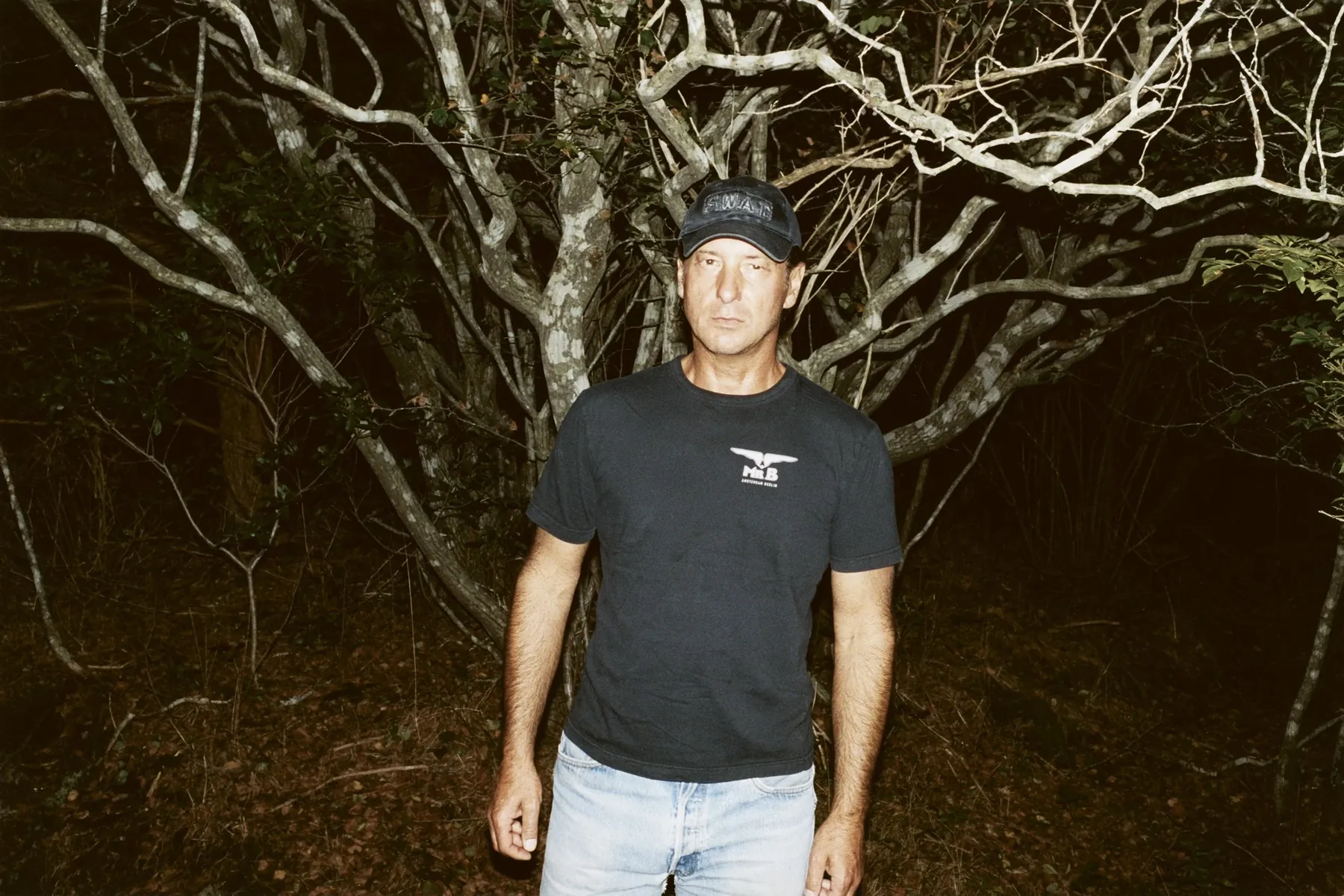
Since 2005 Lang has worked only as an artist, between New York City and Long Island. His starting point is the material itself. He makes sculptures, reliefs, assemblage paintings and collages that move between abstraction and figuration, exploring space beyond the limits of the human body. In 2007 he showed “Next Ever After” at The Journal Gallery in New York and the “Selective Memory Series” at the Purple Institute in Paris. His first solo exhibition as a sculptor, “alles gleich schwer”, opened at the Kestnergesellschaft in Hanover in 2008. He has published parts of his ongoing projects, “Long Island Diaries” and “The Selective Memory Series”, in BUTT, Fanzine 137, Visionaire and The Travel Almanac.
In 2009 and 2010 he donated pieces from his fashion career to museum collections around the world, and after the 2010 fire he shredded what remained for “Make It Hard”. Solo exhibitions followed at Sperone Westwater in New York in 2015 and 2017, “BURRY” at Dallas Contemporary in 2016, and “Various Conditions” in Vienna and at the Sammlung Friedrichshof in 2017. In 2020 and 2021 Anthony Vaccarello, creative director of Saint Laurent, curated exhibitions of his work at Saint Laurent Rive Droite in Paris and Los Angeles. In 2025 Neville Wakefield curated “What Remains Behind” at the MAK Center at the Schindler House in Los Angeles.
“The exhibition, ‘Make It Hard’, turned twenty years of clothes into raw material for sculpture.”
The archive
In 2011 Lang gave the contents of the Helmut Lang Archive, about 10,000 objects documenting the label from 1986 to 2005, to the MAK, the Museum of Applied Arts in Vienna. His clothes are also held by the Costume Institute of the Metropolitan Museum of Art, the Kyoto Costume Institute and the Musée de la Mode et du Textile in Paris. In December 2025 the MAK opened “Helmut Lang. Séance de Travail 1986–2005”, the first large exhibition of the archive, which took its title from the name he had given his shows.
Timeline
Click a date for details
Formation 1956–1977
Born in Vienna on 10 March 1956. Grows up with his grandparents in Ramsau am Dachstein, back in Vienna at ten; at eighteen he leaves home and starts designing his own clothes.
Vienna 1977–1986
A made-to-measure studio in Vienna; the first labels read “Bou Bou Lang”.
1986
“Vienne 1880–1938: L’Apocalypse joyeuse”, Centre Pompidou: first collection in Paris; the Helmut Lang label is founded.
Paris 1986–1997
1987
Men and women on the same runway.
1988
The first “Séance de Travail”.
1990
Footwear.
1993–1996
Professor of fashion design, University of Applied Arts, Vienna; Juergen Teller in the backstage from 1993.
1996
Helmut Lang Jeans; CFDA Best International Designer; “I Smell You on My Clothes” with Jenny Holzer, Florence Biennale.
1997
“Art/Fashion”, Guggenheim SoHo.
New York 1998–2005
1998
The company moves to New York; Autumn/Winter 1998–99 shown online; his name on the roofs of taxis.
1999
The Prada Group acquires 51%.
2000
CFDA Menswear Designer of the Year.
2001
Helmut Lang Parfums, introduced through Jenny Holzer’s texts; Cuiron in 2002.
“Make It Hard”, The Fireplace Project, East Hampton.
2015–2017
Sperone Westwater, New York; “BURRY”, Dallas Contemporary; “Various Conditions”, Vienna.
2020–2021
Exhibitions curated by Anthony Vaccarello at Saint Laurent Rive Droite.
2025
“What Remains Behind”, MAK Center, Schindler House, Los Angeles.
The archive 2011–2025
About 10,000 objects from 1986 to 2005 given to the MAK, Vienna, in 2011.
2025
December, “Helmut Lang. Séance de Travail 1986–2005”, MAK.
Il designer austriaco che ha ridotto la moda degli anni Novanta a taglio, materiale e attitudine, ha portato la sua maison a New York, ha presentato la prima collezione su internet e nel 2005 ha lasciato la moda per diventare artista.
Nell’estate del 2011, alla galleria Fireplace Project di East Hampton, Helmut Lang ha esposto sedici colonne bianche che andavano dal pavimento al soffitto. Erano fatte con circa 6.000 suoi capi, triturati e legati con resina e pigmento: tessuto, pelliccia, piume, pelle, plastica, capelli, metallo. L’anno prima un incendio era scoppiato nell’edificio del suo studio di New York, dove era conservato il resto del suo archivio di moda. Controllando i pezzi, ha scritto, si è lentamente “appassionato all’idea di distruggerlo da solo”. La mostra, “Make It Hard”, ha trasformato vent’anni di abiti in materia prima per la scultura. Ha anche chiuso, materialmente, la carriera di un designer che aveva già lasciato la moda sei anni prima.
Formazione
Lang è nato a Vienna il 10 marzo 1956, registrato all’anagrafe come Peter Scepka. I genitori si sono separati quando aveva cinque mesi ed è stato mandato dai nonni materni a Ramsau am Dachstein, un villaggio delle Alpi stiriane. Il nonno aveva una bottega da calzolaio. I nonni erano profughi dalla Jugoslavia e per molto tempo non sono stati accettati dalla comunità locale. “Ero un bambino di genitori divorziati, scaricato lì da Vienna”, ha raccontato in seguito. Viveva nella loro soffitta e fino a circa nove anni non ha avuto né televisione né telefono.
A dieci anni è tornato a Vienna a vivere con il padre e la sua nuova moglie, e a diciotto ha lasciato casa. Ha frequentato una scuola commerciale e ha lavorato come barista. Gli amici lo chiamavano Bou Bou. Non trovando giacche e t-shirt che gli piacessero, ha cominciato a disegnarsele da solo, senza alcuna formazione da sarto. Il nome che ha scelto per il suo lavoro univa uno dei suoi nomi di battesimo al cognome dei nonni materni.
Vienna, 1977–1986
Nel 1977 ha aperto a Vienna un atelier di abiti su misura, dove fino al 1984 ha sviluppato collezioni proprie. Le prime etichette riportavano “Bou Bou Lang”. I suoi capi hanno trovato clienti in tutta l’Austria. L’apertura internazionale è arrivata nel 1986, quando il governo austriaco ha incluso il suo lavoro nella mostra “Vienne 1880–1938: L’Apocalypse joyeuse” al Centre Pompidou di Parigi. Lì ha presentato la sua prima collezione, fuori dal calendario ufficiale, e nello stesso anno ha fondato il marchio Helmut Lang.
Parigi, 1986–1997
Nel 1987 Lang ha presentato insieme le collezioni uomo e donna, sulla stessa passerella. Nel 1988 ha introdotto un formato che ha chiamato “Séance de Travail”, sessione di lavoro: la classica passerella rialzata è stata eliminata, e i modelli camminavano veloci, con tacchi bassi e quasi senza trucco, davanti a un pubblico ristretto e selezionato. Ha mantenuto quel nome per tutte le presentazioni fino al 2004.
Tra la fine degli anni Ottanta e gli anni Novanta ha definito i termini di un nuovo minimalismo. Il taglio era stretto ed esatto, la palette per lo più nera, bianca e grigia, interrotta da un’unica striscia di colore o da un lampo di nastro riflettente. Accostava materiali che non appartenevano allo stesso mondo, come la seta con la plastica o il tulle sopra la sartoria, e prendeva in prestito gomma, nylon tecnico e tessuti protettivi dall’abbigliamento da lavoro e dall’industria. La linea è diventata un guardaroba completo: calzature nel 1990, underwear nel 1995, Helmut Lang Jeans nel 1996, poi occhiali, borse e accessori. Il denim non è mai stato trattato come una linea secondaria; era tagliato con lo stesso rigore della sartoria.
Dal 1993 al 1996 ha insegnato come professore di fashion design all’Università di Arti Applicate di Vienna. Dal 1993 al 2005 il fotografo Juergen Teller ha documentato i suoi backstage. Nel 1996 il CFDA lo ha nominato Best International Designer, e la città di Vienna gli ha conferito il suo premio per le belle arti.
L’arte ha fatto parte del lavoro fin dall’inizio. Nel 1996, alla Biennale di Firenze, ha presentato “I Smell You on My Clothes” con Jenny Holzer, a cura di Germano Celant e Ingrid Sischy. Nel 1997 ha partecipato ad “Art/Fashion” al Guggenheim SoHo. Nel 1998 ha esposto con Louise Bourgeois e Holzer alla Kunsthalle Wien. La sua pubblicità seguiva la stessa logica: pagine e oggetti che mostravano un nome, poche parole o un frammento di corpo invece di un look della collezione.
New York, 1998–2005
Nel 1998 Lang ha trasferito la sua azienda da Vienna a New York, prima maison europea ad attraversare l’Atlantico. In quella stagione ha annullato la sfilata e ha presentato l’Autunno/Inverno 1998–99 online e su CD-ROM, la prima collezione di moda mai mostrata su internet. Nello stesso anno il suo nome è comparso sui tetti dei taxi di New York. Sono seguiti gli Helmut Lang Parfums, presentati attraverso i testi di Jenny Holzer, e a New York ha aperto una Helmut Lang Parfumerie. Nel 2001 sono uscite le fragranze uomo e donna, nel 2002 Cuiron. Nel 2000 il CFDA lo ha nominato Menswear Designer of the Year.
Nel 1999 il Gruppo Prada ha acquisito il 51% della società. Prada gestiva produzione e distribuzione e ha aperto negozi in Europa e in Asia. Lang ha mantenuto il controllo del design e della pubblicità, e ha riunito tutte le linee sotto il marchio principale. Nel 2004 Prada ha rilevato il resto della società. Nel 2005 Lang ha lasciato la maison che aveva fondato. Nel 2006 Prada ha venduto il marchio al gruppo giapponese Link Theory Holdings, poi entrato in Fast Retailing, che lo ha portato avanti con altri designer.
L’artista
Dal 2005 Lang lavora solo come artista, tra New York e Long Island. Il suo punto di partenza è il materiale stesso. Realizza sculture, rilievi, assemblaggi e collage che si muovono tra astrazione e figurazione, esplorando lo spazio oltre i limiti del corpo umano. Nel 2007 ha esposto “Next Ever After” alla Journal Gallery di New York e la “Selective Memory Series” al Purple Institute di Parigi. La sua prima mostra personale da scultore, “alles gleich schwer”, è stata inaugurata alla Kestnergesellschaft di Hannover nel 2008. Ha pubblicato parti dei suoi progetti in corso, “Long Island Diaries” e “The Selective Memory Series”, su BUTT, Fanzine 137, Visionaire e The Travel Almanac.
Nel 2009 e nel 2010 ha donato capi della sua carriera nella moda a collezioni museali in tutto il mondo, e dopo l’incendio del 2010 ha triturato ciò che restava per “Make It Hard”. Sono seguite mostre personali da Sperone Westwater a New York nel 2015 e nel 2017, “BURRY” al Dallas Contemporary nel 2016 e “Various Conditions” a Vienna e alla Sammlung Friedrichshof nel 2017. Nel 2020 e nel 2021 Anthony Vaccarello, direttore creativo di Saint Laurent, ha curato mostre del suo lavoro da Saint Laurent Rive Droite a Parigi e a Los Angeles. Nel 2025 Neville Wakefield ha curato “What Remains Behind” al MAK Center della Schindler House di Los Angeles.
“La mostra, ‘Make It Hard’, ha trasformato vent’anni di abiti in materia prima per la scultura.”
L’archivio
Nel 2011 Lang ha donato il contenuto dell’Helmut Lang Archive, circa 10.000 oggetti che documentano il marchio dal 1986 al 2005, al MAK, il Museo di Arti Applicate di Vienna. I suoi capi sono conservati anche al Costume Institute del Metropolitan Museum of Art, al Kyoto Costume Institute e al Musée de la Mode et du Textile di Parigi. Nel dicembre 2025 il MAK ha inaugurato “Helmut Lang. Séance de Travail 1986–2005”, la prima grande mostra dell’archivio, intitolata con il nome che lui aveva dato alle sue sfilate.
Cronologia
Clicca una data per i dettagli
Formazione 1956–1977
Nasce a Vienna il 10 marzo 1956. Cresce con i nonni a Ramsau am Dachstein, torna a Vienna a dieci anni; a diciotto lascia casa e comincia a disegnarsi i vestiti.
Vienna 1977–1986
Un atelier su misura a Vienna; le prime etichette dicono “Bou Bou Lang”.
1986
“Vienne 1880–1938: L’Apocalypse joyeuse”, Centre Pompidou: prima collezione a Parigi; nasce il marchio Helmut Lang.
Parigi 1986–1997
1987
Uomo e donna sulla stessa passerella.
1988
La prima “Séance de Travail”.
1990
Calzature.
1993–1996
Professore di fashion design all’Università di Arti Applicate di Vienna; Juergen Teller nel backstage dal 1993.
1996
Helmut Lang Jeans; CFDA Best International Designer; “I Smell You on My Clothes” con Jenny Holzer, Biennale di Firenze.
1997
“Art/Fashion”, Guggenheim SoHo.
New York 1998–2005
1998
L’azienda si trasferisce a New York; l’Autunno/Inverno 1998–99 presentato online; il suo nome sui tetti dei taxi.
1999
Il Gruppo Prada acquisisce il 51%.
2000
CFDA Menswear Designer of the Year.
2001
Helmut Lang Parfums, presentati con i testi di Jenny Holzer; Cuiron nel 2002.